
Oxydia vesulia
(Cramer, 1779)
spurge spanworm moth
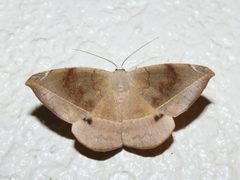
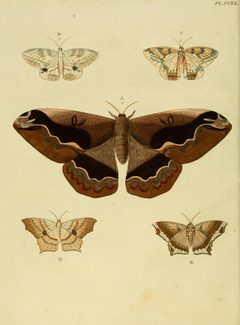
Oxydia vesulia is a geometrid with broad distribution across the Americas. In Brazil, it is a secondary pest of eucalyptus plantations, causing economic damage during . The has been evaluated as a potential agent for Brazilian peppertree but was rejected due to its wide range spanning multiple plant . It serves as host for the Tetrastichus howardi, which has been investigated for .
Pronunciation
How to pronounce Oxydia vesulia: /ɒkˈsɪdiə vɛˈsuːliə/
These audio files are automatically generated. While they are not always 100% accurate, they are a good starting point.
Images
Habitat
Eucalyptus plantations in Brazil, where occur with longer periods in the same area. Native range include tropical to subtropical environments associated with plants in the Anacardiaceae and other plant groups.
Distribution
Caribbean, Central America, North America, and South America. In South America, specifically reported from Brazil (Minas Gerais State, São Paulo State, Rio Grande do Sul).
Diet
Folivorous. Larvae feed on Eucalyptus urophylla leaves in Brazilian plantations. Under laboratory conditions, accepts foliage of multiple including Schinus terebinthifolia, Schinus molle, Mangifera indica, Anacardium occidentale, Spondias purpurea, Spondias mombin, Rhus copallinum, Rhus glabra, Toxicodendron radicans, Metopium toxiferum, Searsia lancea, and Searsia crenata.
Host Associations
- Eucalyptus urophylla - food plantprimary in Brazilian eucalyptus plantations
- Schinus terebinthifolia - food plantevaluated for ; larvae feed and develop on foliage
- Schinus molle - food plantaccepted in laboratory range trials
- Mangifera indica - food plantaccepted in laboratory range trials
- Anacardium occidentale - food plantaccepted in laboratory range trials
- Spondias purpurea - food plantaccepted in laboratory range trials
- Spondias mombin - food plantaccepted in laboratory range trials
- Rhus copallinum - food plantaccepted in laboratory range trials
- Rhus glabra - food plantaccepted in laboratory range trials
- Toxicodendron radicans - food plantaccepted in laboratory range trials
- Metopium toxiferum - food plantaccepted in laboratory range trials
- Searsia lancea - food plantaccepted in laboratory range trials
- Searsia crenata - food plantaccepted in laboratory range trials
- Tetrastichus howardi - pupal endoparasitoid; 100% rate in pupae under laboratory conditions, 40% in caterpillars
Life Cycle
Six or seven larval instars. Larval stage lasts approximately 27 days for males and 31 days for females. -to- development approximately 30-40 days under laboratory conditions. Multiple overlapping per year with continuous breeding possible under favorable conditions.
Behavior
Fourth-instar caterpillars show considerably increased leaf consumption. Larvae feed gregariously on foliage, causing significant defoliation. Parasitized caterpillars show reduced feeding, color changes, and body consistency changes.
Ecological Role
Secondary pest and defoliator reducing productivity of eucalyptus plantations in Brazil. Serves as for agents including the Tetrastichus howardi. Potential herbivore of native Anacardiaceae in natural range.
Human Relevance
Economic pest in Brazilian eucalyptus plantations, causing damage during . Investigated as potential agent for Brazilian peppertree (Schinus terebinthifolia) in Florida, USA, but rejected due to unacceptable non-target risks to mango, cashew, and other economically important . Subject of research using biological control.
More Details
Subspecies
Three recognized: Oxydia vesulia alternata Warren, 1905; Oxydia vesulia transponens Walker, 1860 (also spelled transpeneus in some literature); and Oxydia vesulia vesulia (Cramer, 1779). The subspecies O. v. transponens was the focus of evaluation for Brazilian peppertree.
Reproduction
Female live an average of 12 days and can lay up to 1,970 in up to nine oviposition bouts.
Parasitism Research
Laboratory studies at 25±1°C, 60±20% humidity, and 12:12 L:D found that 40% of parasitized caterpillars died before pre-pupal stage, 40% reached but died due to inadequate formation, and 20% generated with no . All pupae were parasitized with successful parasitoid emergence, indicating pupal stage is more suitable for T. howardi development.
Sources and further reading
- BugGuide
- Wikipedia
- GBIF taxonomy match
- iNaturalist taxon
- NCBI Taxonomy
- Catalogue of Life
- Tetrastichus howardi (Hymenoptera: Eulophidae): first report of parasitism in Oxydia vesulia (Lepidoptera: Geometridae)
- Life history and host range ofOxydia vesulia transpeneus, an unsuitable biological control agent of Brazilian peppertree