
Cingilia catenaria
(Drury, 1773)
Chain-dotted Geometer, Chain Dot Geometer, Chainspotted Geometer, Chain-spotted Geometer
Cingilia catenaria is a North American geometrid known for its distinctive chain-like wing pattern. are active in spring and early summer. The has a broad distribution across eastern and central North America, extending from the Atlantic coast to the Great Plains.
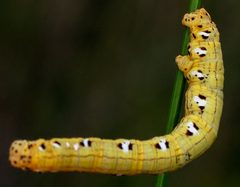
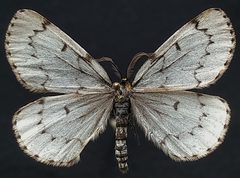
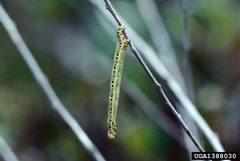
Pronunciation
How to pronounce Cingilia catenaria: //sɪŋˈɡɪliə ˌkætəˈnɛɹiə//
These audio files are automatically generated. While they are not always 100% accurate, they are a good starting point.
Identification
Distinguished from similar geometrids by the characteristic chain of dark dots running across the wings, rather than continuous lines or bands. The pattern resembles a dotted or dashed line rather than solid transverse lines found in many related . Can be confused with some Operophtera or Erannis species, but the specific arrangement of discrete dots in a chain pattern is diagnostic.
Images
Appearance
Medium-sized geometrid with wings marked by a series of dark dots forming chain-like lines across pale gray to brownish forewings. Forewing length approximately 15–20 mm. Wings are relatively broad with slightly scalloped margins. Body is slender and matches the general wing coloration. are .
Habitat
Deciduous and mixed forests, woodland edges, and shrubby areas. are often found in wooded with oak, maple, and other broadleaf trees. Larval habitat includes the foliage of trees and shrubs.
Distribution
Eastern and central North America. Range extends from Nova Scotia and New Brunswick south to Maryland and Virginia, westward through the Great Lakes region to Manitoba, Saskatchewan, and Alberta. Absent from the far southeastern United States and most of the western cordillera.
Seasonality
fly in spring, with peak activity from March to June depending on latitude. Earlier in southern portions of range (March–April), later in northern areas and at higher elevations (May–June). Single brooded.
Diet
Larvae feed on leaves of various deciduous trees and shrubs, including oaks (Quercus), maples (Acer), and birches (Betula). Specific plant records are limited but the is associated with broadleaf forest vegetation.
Host Associations
- Quercus - larval food plantoak
- Acer - larval food plantmaple
- Betula - larval food plantbirch
Life Cycle
Holometabolous with complete . laid on plant foliage. Larvae feed externally on leaves, occurs in soil or leaf litter. Overwinters as pupa. Single per year with emerging in spring.
Behavior
are and attracted to light. Males are active fliers and seek females via detection. Larvae are typical external leaf feeders, resting on twigs or foliage when not feeding. Adults may be found resting on tree trunks during the day, where their cryptic coloration provides camouflage against bark.
Ecological Role
Larval herbivore in deciduous forest . Contributes to nutrient cycling through leaf consumption and subsequent deposition of . Serves as prey for insectivorous birds, bats, and other . may function as minor when nectaring.
Human Relevance
Occasional minor pest in ornamental settings when larval densities are high, though rarely of economic significance. Frequently encountered by enthusiasts and in light-trapping surveys. Used as an for mature deciduous forest in ecological monitoring.
Similar Taxa
- Operophtera brumataSimilar size and wing shape, but has more uniform gray coloration without distinct chain-dot pattern; also has different seasonal timing (late autumn )
- Erannis defoliariaLarger size with more pronounced wing scalloping and different pattern of transverse lines rather than discrete dots
- Lomographa vestaliataSimilar pale coloration but has more diffuse, wavy lines rather than the characteristic chain of dots
More Details
Etymology
Specific epithet 'catenaria' derives from Latin 'catena' meaning chain, referring to the chain-like pattern of dots on the wings.
Taxonomic History
Originally described by Dru Drury in 1773 as Phalaena catenaria, later transferred to the Cingilia.