
Besma quercivoraria
(Guenée, 1857)
Oak Besma, Oak Besma Moth
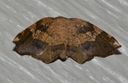
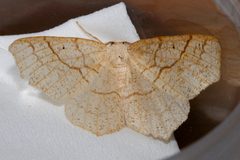
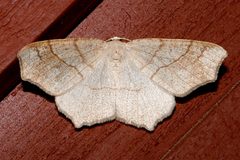
Besma quercivoraria, the oak besma, is a North American geometrid with two per year. are sexually dimorphic and active from spring through summer, with timing varying by latitude. The is notable for its broad plant range among deciduous trees and conifers.
Pronunciation
How to pronounce Besma quercivoraria: /ˈbɛs.mə ˌkwɜːr.sɪ.vɔːˈreɪ.rɪ.ə/
These audio files are automatically generated. While they are not always 100% accurate, they are a good starting point.
Identification
Distinguished from similar geometrid moths by combination of: in , specific wing patterning associated with oak besma, and varying by region (two per year with southern active April–September, northern populations May–August).
Images
Appearance
Sexually dimorphic with wingspan 27–41 mm. Males and females differ in appearance.
Habitat
Associated with deciduous and mixed forests containing trees including oak, elm, poplar, willow, birch, and spruce.
Distribution
Southern Canada from Newfoundland to British Columbia; contiguous United States except California. Present in Alberta, Manitoba, Saskatchewan, and Vermont.
Seasonality
Two per year. active April–September in southern range, May–August in Ontario, late May–July in Alberta.
Diet
Larvae feed on leaves of oak (Quercus), elm (Ulmus), poplar (Populus), willow (Salix), white spruce (Picea glauca), and paper birch (Betula papyrifera). Paper birch is the primary in southern Canada.
Host Associations
- Quercus - larval food plant
- Ulmus - larval food plant
- Populus - larval food plant
- Salix - larval food plant
- Picea glauca - larval food plant
- Betula papyrifera - larval food plantPrimary in southern Canada
Life Cycle
Two per year (). period varies by latitude: April–September in south, May–August in Ontario, late May–July in Alberta.
Ecological Role
Larval herbivore on broadleaf and coniferous trees; contributes to nutrient cycling in forest through leaf consumption.
Similar Taxa
- Other Besma speciesSimilar wing patterns and body form; requires examination of genitalia or specific wing markings for definitive identification
- Other Ennominae geometridsShared characteristics; oak besma distinguished by association, , and phenological pattern