
Phaeoura quernaria
(Smith, 1797)
oak beauty, American Oak Beauty
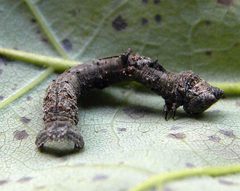
Phaeoura quernaria, commonly known as the oak beauty or American Oak Beauty, is a geometrid native to eastern North America. The is notable for its salt-and-pepper patterned wings that provide effective bark camouflage. It exhibits or depending on latitude, with active from late winter through autumn. Larvae feed on various hardwood trees and the species overwinters as pupae.


Pronunciation
How to pronounce Phaeoura quernaria: /fiˈɔːrə kwɜːrˈnɛɹiə/
These audio files are automatically generated. While they are not always 100% accurate, they are a good starting point.
Identification
Distinguished from similar bark-mimicking geometrids by the specific salt-and-pepper mottling pattern. The combination of eastern North American range, aspen-cherry shrubland association, and period (February–October in south, shorter season northward) aids identification. May be confused with other Phaeoura or bark-patterned geometrids; precise identification may require examination of genitalia or geographic context.
Images
Habitat
Aspen-cherry shrubland; associated with early successional or edge containing preferred larval trees. Habitat specificity linked to presence of Populus, Prunus, Betula, and Salix .
Distribution
Eastern North America, ranging west to east-central Alberta. Documented in Canadian provinces: Alberta, Manitoba, Saskatchewan; and throughout eastern United States including Vermont. Core range appears centered in and temperate deciduous forest zones.
Seasonality
active February through October in southern range, with two annually. Northern have compressed season with likely single generation. Larvae present June through October.
Diet
Larvae feed on various hardwood trees: paper birch (Betula papyrifera), willow (Salix spp.), poplar/aspen (Populus spp.), and cherry (Prunus spp.). feeding habits not documented.
Host Associations
- Betula papyrifera - larval food plantpaper birch
- Salix - larval food plantwillow
- Populus - larval food plantpoplar and aspen
- Prunus - larval food plantcherry
Life Cycle
Holometabolous development with , larval, pupal, and stages. Two per year in southern range; single generation likely in north. occurs in pupal stage. Larval development spans June to October.
Behavior
are and attracted to light. Cryptic resting posture on tree bark enhances camouflage. Larvae exhibit typical geometrid looping locomotion.
Ecological Role
Larval herbivore on early successional hardwood trees; contributes to nutrient cycling in aspen-cherry shrubland . Serves as prey for birds, , and other natural enemies.
Human Relevance
Subject of citizen science observation (5435+ iNaturalist records). Occasionally encountered at lighting events. No significant economic impact documented; not considered a forestry pest despite hardwood-feeding larvae.
Similar Taxa
- Pseudothyatira cymatophoroidesSimilar bark-camouflage pattern but belongs to Drepanidae; distinguished by tufted and different wing shape.
- Other Phaeoura speciesCongeneric may share similar and appearance; precise separation requires detailed morphological examination.
More Details
Taxonomic Note
The was described by James Edward Smith in 1797. The name has been rendered as Nacophora in some older sources (e.g., Eric blog), but Phaeoura is the currently accepted generic placement.