
Macaria simpliciata
(Barnes & McDunnough, 1918)
Macaria simpliciata is a of geometrid in the Geometridae, Ennominae. It was described by Barnes and McDunnough in 1918. The species is known from a limited number of observations, with iNaturalist recording 16 observations as of the available data. Like other members of the Macaria, it is presumed to be a small to medium-sized moth with cryptic coloration adapted for resting on bark or foliage.
Pronunciation
How to pronounce Macaria simpliciata: /məˈkɛəɹiə ˌsɪmplɪˈsiːɑːtə/
These audio files are automatically generated. While they are not always 100% accurate, they are a good starting point.
Identification
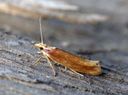
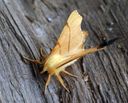
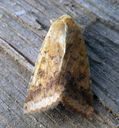
Can be distinguished from other Macaria by the combination of relatively plain, unmarked forewings with reduced or absent transverse lines—consistent with the specific epithet "simpliciata" (meaning simplified or plain). The species lacks the more complex wing patterns seen in such as Macaria bisignata or Macaria signaria. Accurate identification requires examination of genitalia or comparison with due to the subtle morphological differences within the .
Images
Distribution
North America; recorded from the United States. Specific state or provincial records are sparse due to limited collection and observation data.
Similar Taxa
- Macaria bisignataShares similar size and general wing shape but has more pronounced transverse lines and often a distinct discal spot on the forewing, whereas M. simpliciata has reduced pattern elements.
- Macaria signariaTypically shows more contrasting light and dark patterning on the wings; M. simpliciata is notably plainer with less distinct markings.
- Macaria pustulariaOften exhibits more mottled or speckled wing patterns; M. simpliciata lacks such variegation and presents a more uniform ground color.
More Details
Taxonomic note
The specific epithet 'simpliciata' refers to the relatively simple, unadorned wing pattern compared to other Macaria . The species was described from North American material, and its type locality is in the United States.