
Macaria signaria
(Hübner, [1809])
dusky peacock, pale-marked angle, spruce-fir looper, Northern Conifer Angles
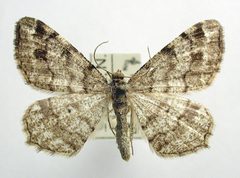
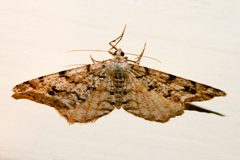
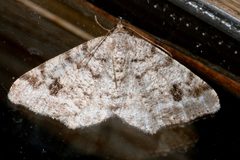
Macaria signaria is a small geometrid with a wingspan of 20–28 mm. Two are recognized: M. s. signaria across Eurasia and M. s. dispuncta in North America. The is associated with coniferous forests and has been documented feeding on spruce and larch as larvae.
Pronunciation
How to pronounce Macaria signaria: /məˈkɛə.riə sɪɡˈnɛə.riə/
These audio files are automatically generated. While they are not always 100% accurate, they are a good starting point.
Identification
Distinguished from by combination of small size (20–28 mm wingspan), dusky brown-gray ground color, and pale transverse forewing markings forming angled pattern. M. s. dispuncta in North America shows reduced or absent discal spot compared to nominate . Similar to other Macaria but generally darker and more muted in coloration; genitalia examination may be required for definitive identification where ranges overlap.
Images
Habitat
Coniferous forests, particularly spruce-fir and larch stands. Associated with and montane forest zones. Occupies mature to semi-mature conifer woodlands with tree presence.
Distribution
Holarctic distribution. M. s. signaria: Europe, Turkey, Caucasus, Transcaucasia, Ural Mountains, Siberia, Russian Far East, Sakhalin, northern Iran, and Japan. Subspecies M. s. dispuncta: North America from Yukon and Newfoundland south to North Carolina, New Mexico, Arizona, and California.
Seasonality
fly from May to July; exact timing varies by latitude and elevation. Single-brooded () across most of range.
Diet
Larvae feed on Picea abies (Norway spruce) and Larix sibirica (Siberian larch). feeding habits not documented.
Host Associations
- Picea abies - larval primary in European range
- Larix sibirica - larval primary in Asian range
Life Cycle
Complete with , larva, pupa, and stages. Larvae are loopers (inchworms) characteristic of Geometridae, with reduced . occurs in soil or leaf litter. Single per year; adults emerge in late spring to mid-summer.
Behavior
Larvae move with characteristic looping gait due to reduced number of . are and attracted to light. Rest with wings held flat or slightly tented over body.
Ecological Role
Larval herbivore on coniferous trees; contributes to nutrient cycling in forest . may cause localized defoliation of trees.
Human Relevance
Occasional forest pest when larval are high; 'spruce-fir looper' reflects economic significance in forestry. readily attracted to light traps, making well-documented in surveys.
Similar Taxa
- Macaria wauariaOverlapping range in Europe; similar size and general appearance but with more contrasting pattern and different forewing markings
- Macaria alternataSimilar conifer-associated Macaria ; distinguished by more pronounced alternating light and dark bands on forewings
- Semiothisa speciesFormerly classified in this ; now separated but may appear in older literature
More Details
Nomenclature
has undergone taxonomic revision; previously placed in Semiothisa. M. s. dispuncta described by Walker in 1860 from North American .
Conservation
Widespread and abundant across range; not considered threatened. Dependent on intact coniferous forest .