Macaria wauaria
(Linnaeus, 1758)
V-Moth
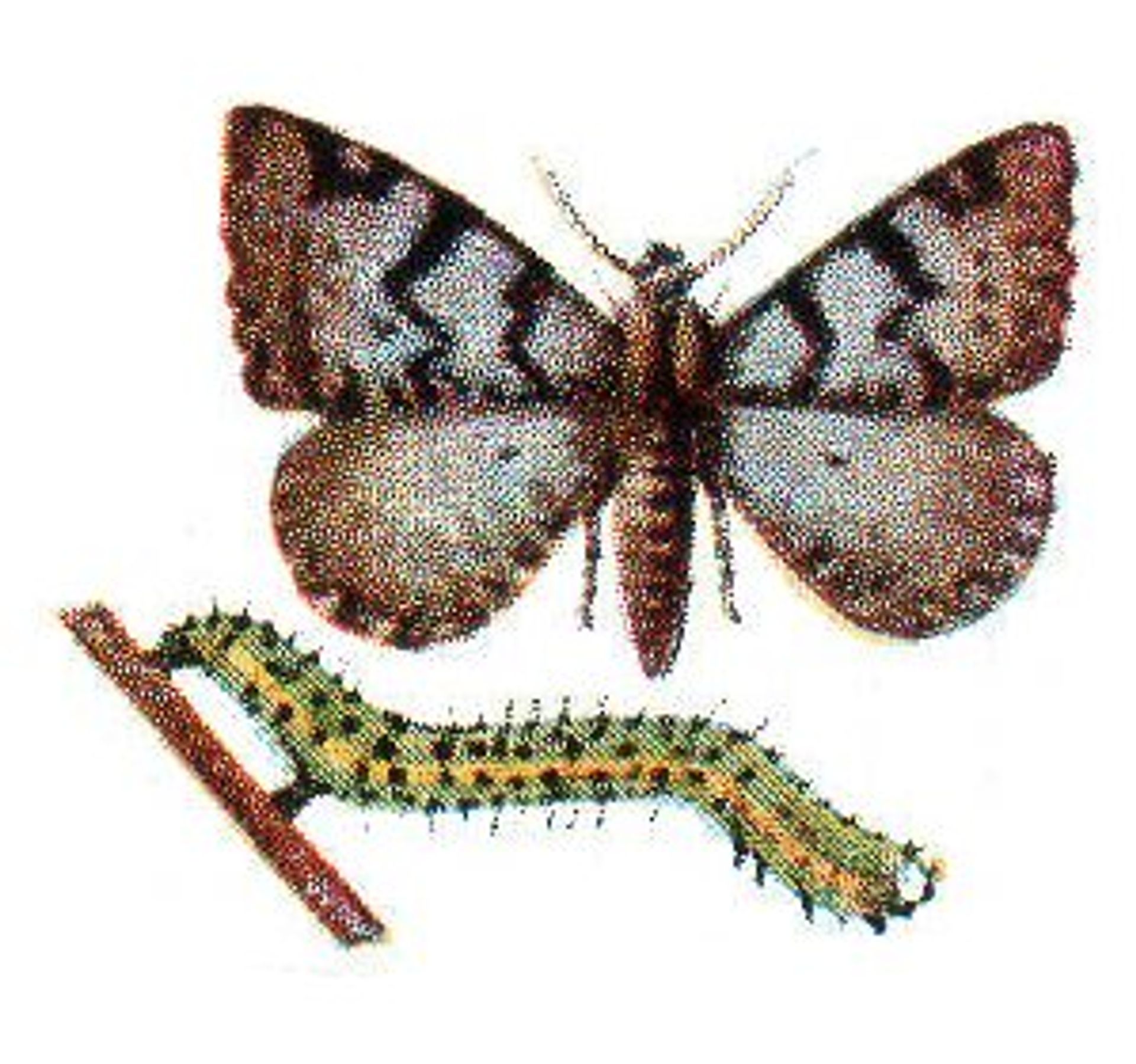
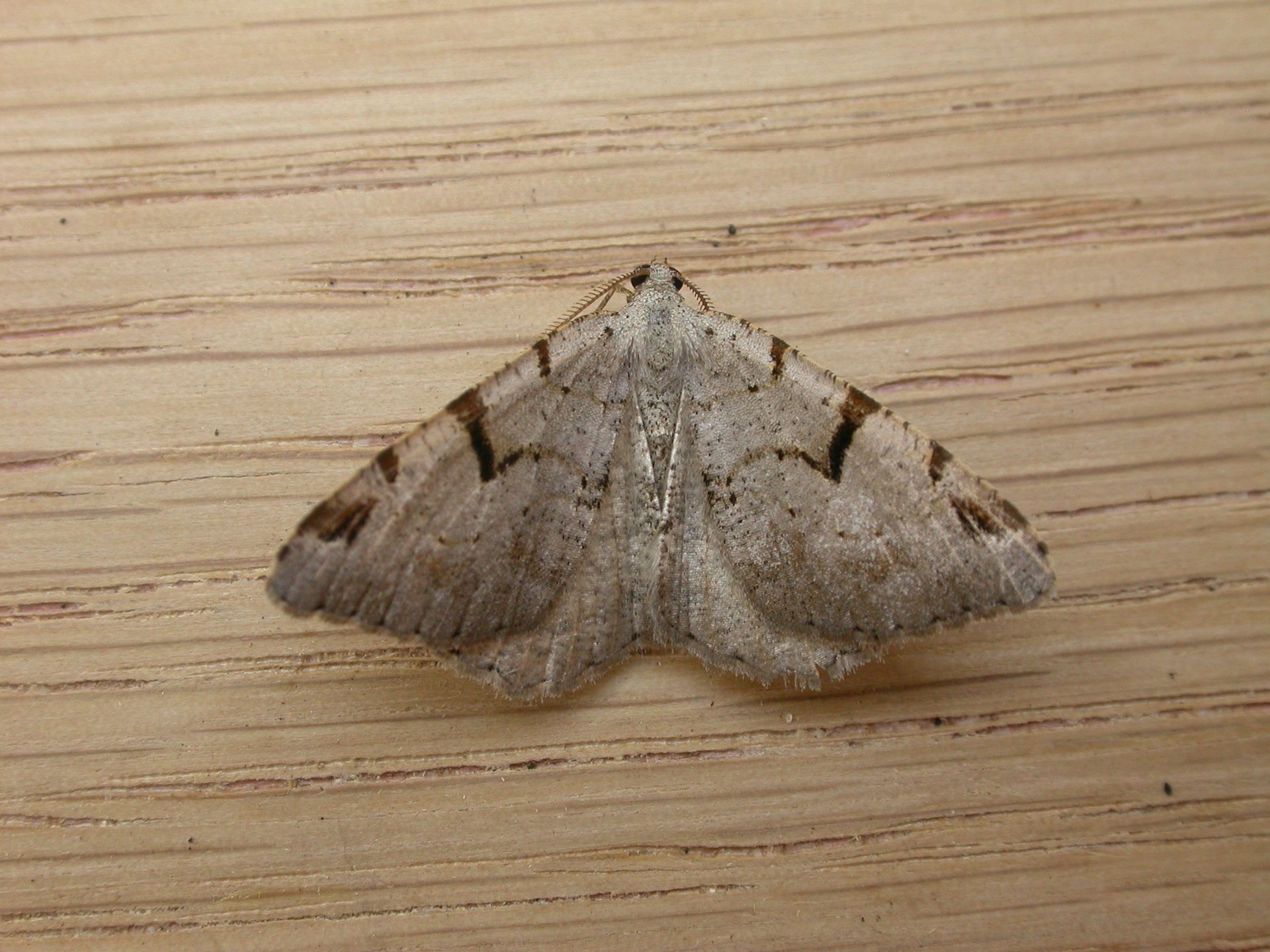
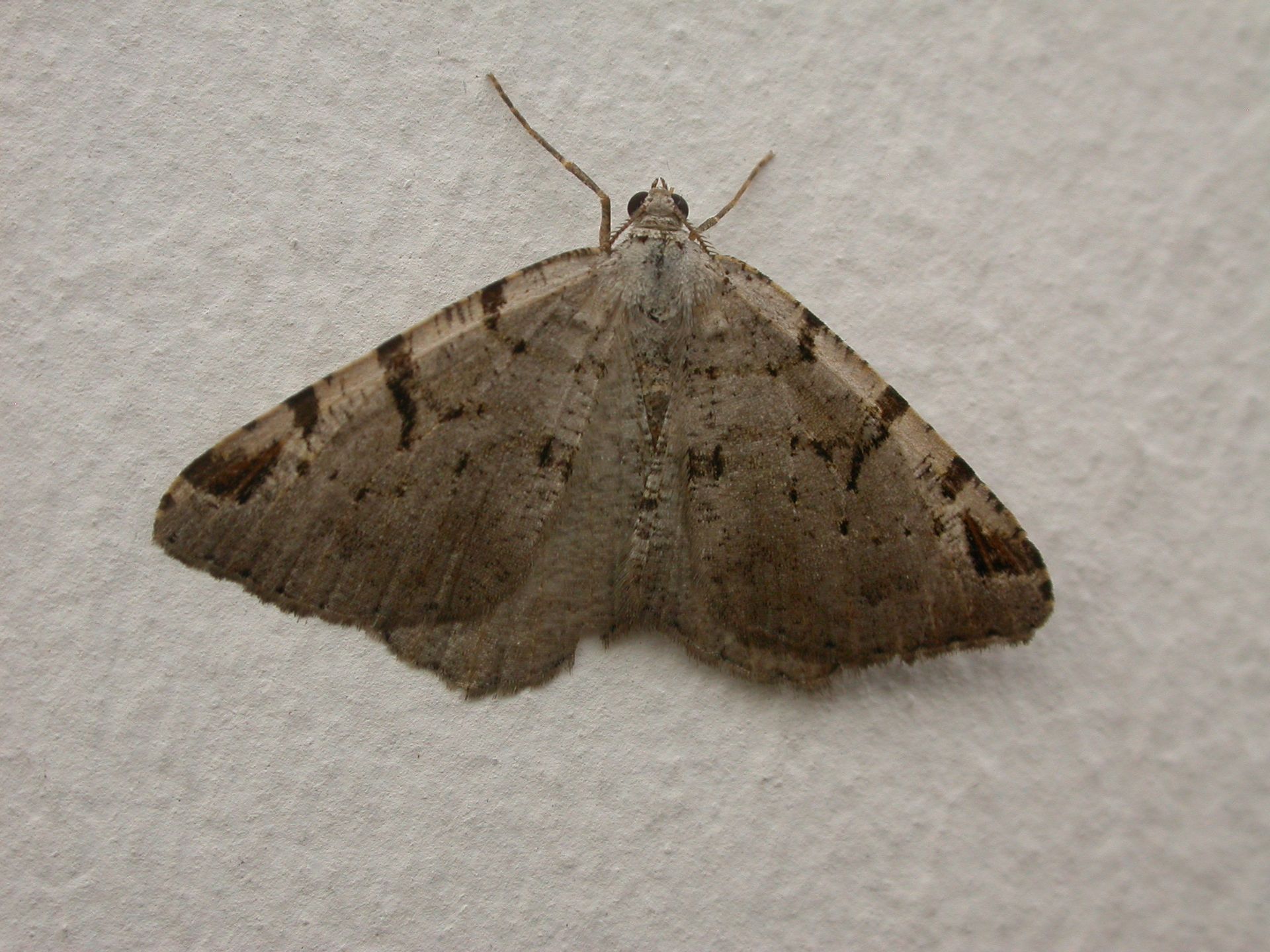
Macaria wauaria, commonly known as the V-, is a geometrid moth with a Holarctic distribution. are recognized by the distinctive V-shaped dark marking on the forewing. The was first described by Linnaeus in 1758. It is associated with Ribes plants and occupies diverse semi-open including hedgerows and orchards.
Pronunciation
How to pronounce Macaria wauaria: /məˈkɛə.ri.ə wɔːˈweə.ri.ə/
These audio files are automatically generated. While they are not always 100% accurate, they are a good starting point.
Identification
The V-shaped dark marking on the forewing is diagnostic and gives the its . The angular forewing apex and purple-grey ground colour help distinguish it from similar Macaria species. Male combed are distinctive but require close examination.
Images
Habitat
Hedges, forest edges, orchards, and park landscapes. in orchards. In mountains, recorded up to 1700 meters elevation.
Distribution
Holarctic. Palearctic: Morocco through northern and central Europe to Russian Far East, Siberia, Amur, Kamchatka, and Central Asia; northern limit in Lapland. Nearctic: Labrador, Quebec, Ontario, and Nova Scotia.
Seasonality
fly from May to July in Belgium and the Netherlands; timing may vary across the range.
Diet
Larva feeds on Ribes.
Host Associations
- Ribes - larval food plant
Human Relevance
Occurs in orchards, where it may be considered a minor pest due to larval feeding on Ribes (currants and gooseberries).
Similar Taxa
- Other Macaria speciesSimilar wing patterns and size, but lack the distinctive V-shaped forewing marking.
More Details
Taxonomic history
First described by Carl Linnaeus in the 10th edition of Systema Naturae (1758), making it one of the earliest described Lepidoptera.