
Digrammia yavapai
(Grossbeck, 1907)
New Mexico Locust Angle
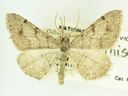
Digrammia yavapai is a of geometrid in the Geometridae, first described by Grossbeck in 1907. It is known from North America and has been assigned MONA/Hodges number 6393. The species is part of a diverse of moths commonly known as "granite moths" or "angle moths" due to their characteristic wing patterns.
Pronunciation
How to pronounce Digrammia yavapai: /dɪˈɡræmiə jɑːvəˈpaɪ/
These audio files are automatically generated. While they are not always 100% accurate, they are a good starting point.
Identification
Members of the Digrammia are typically recognized by their cryptic, mottled gray or brown coloration that resembles granite or stone surfaces, providing effective camouflage against rocky substrates. The specific distinguishing features of D. yavapai from are not documented in available sources.
Images
Distribution
North America. Specific state or provincial records are not detailed in available sources, though the "New Mexico Locust Angle" suggests association with New Mexico and potentially the southwestern United States.
Host Associations
- Robinia neomexicana - probableThe 'New Mexico Locust Angle' strongly suggests association with New Mexico locust (Robinia neomexicana), though this relationship requires verification.
Behavior
are and attracted to ultraviolet light sources, a trait common to most geometrid moths.
Similar Taxa
- Digrammia muscariataBoth are North American Digrammia with similar cryptic coloration; D. muscariata has been recorded at blacklighting events in California and may overlap in range.
- Digrammia californiariaAnother western North American with granite-like patterning; the two may be confused where their ranges overlap.
More Details
Taxonomic history
Originally described by Grossbeck in 1907. The specific epithet 'yavapai' refers to the Yavapai people, an group of Arizona, suggesting the type locality may be in that region.
Collection data
The has 55 observations recorded on iNaturalist as of the knowledge cutoff, indicating it is documented but not frequently encountered.
Sources and further reading
- BugGuide
- Wikipedia
- GBIF taxonomy match
- iNaturalist taxon
- Catalogue of Life
- What Will You See at Bohart Museum Open House | Bug Squad
- Bembicid Holdings | Entomology Research Museum
- Blacklighting at the Bohart: They Saw the Light | Bug Squad
- Oh, What a (Moth) Night! | Bug Squad
- Bohart Open House: Like a Moth to a Flame | Bug Squad
- Mark Your Calendar for 'Moth Night' at Bohart Museum: July 30 | Bug Squad