
Campaea perlata
(Guenée, [1858])
Pale Beauty, Fringed Looper, Light Emerald
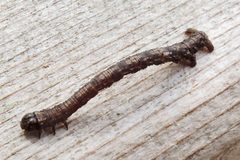
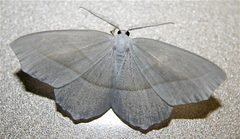
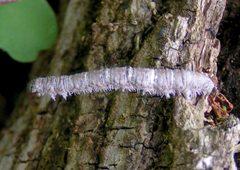
Campaea perlata is a medium-sized geometrid found throughout North America, commonly known as the pale beauty. are pale greenish to white with faint continuous lines across both forewings and hindwings, with females notably larger than males. The caterpillar, called the fringed looper, is an inchworm with distinctive fringe-like setae and twig-mimicking camouflage. The has two in most of its range, with larvae on exposed tree trunks and branches.
Pronunciation
How to pronounce Campaea perlata: /kæmˈpaɪə pərˈleɪtə/
These audio files are automatically generated. While they are not always 100% accurate, they are a good starting point.
Identification
distinguished by pale greenish-white coloration with faint but continuous transverse lines across both wing pairs; most similar North American Campaea is C. margaritata (light emerald), a name sometimes incorrectly applied to C. perlata. Caterpillars identified by fringe-like lateral setae, extra on fifth abdominal segment (8th body segment), and twig-mimicking posture with dark -to- band.
Images
Habitat
Deciduous forests, woods, and parks; rest preferentially on light backgrounds for camouflage. Larvae found on woody vegetation including shrubs and trees.
Distribution
Throughout most of North America; Canada from Newfoundland and Labrador north to Yukon; United States from Alaska south to Arizona, with scattered reports from Florida.
Seasonality
fly June to September, varying by region. Two per year in most of range; single generation in far north. caterpillars mature May–June; summer generation caterpillars mature June–September.
Diet
Larvae are feeders on woody plants; recorded from 65 of shrubs and trees including alder, ash, basswood, beech, birch, blueberry, Canada buffaloberry, cherry, fir, elm, hemlock, maple, oak, photinia, pine, poplar, rose, spruce, tamarack, and willow. feeding habits not documented.
Host Associations
- Alnus - larval food plantalder
- Fraxinus - larval food plantash
- Tilia - larval food plantbasswood
- Fagus - larval food plantbeech
- Betula - larval food plantbirch
- Vaccinium - larval food plantblueberry
- Shepherdia canadensis - larval food plantCanada buffaloberry
- Prunus - larval food plantcherry
- Abies - larval food plantfir
- Ulmus - larval food plantelm
- Tsuga - larval food planthemlock
- Acer - larval food plantmaple
- Quercus - larval food plantoak
- Photinia - larval food plant
- Pinus - larval food plantpine
- Populus - larval food plantpoplar
- Rosa - larval food plantrose
- Picea - larval food plantspruce
- Larix laricina - larval food planttamarack
- Salix - larval food plantwillow
Life Cycle
Complete with two annually in most of range, one in far north. hatch into caterpillars that overwinter exposed on tree trunks and branches. larvae mature May–June; summer generation larvae mature June–September. Fully grown larvae pupate in light green cocoon.
Behavior
Larvae exhibit characteristic looping gait of inchworms due to reduced number. show genetically fixed preference for resting on light backgrounds, enhancing camouflage. Larvae overwinter exposed without seeking shelter, surviving freezing temperatures via antifreeze proteins.
Ecological Role
herbivore on woody vegetation; serves as prey for . Larval twig-mimicry and background-matching represent anti- adaptations.
Human Relevance
Common and widespread; no significant economic impact. Caterpillar fringe-like setae and twig-mimicry of interest for camouflage studies. Name 'perlata' from post-classical Latin for 'pearly'.
Similar Taxa
- Campaea margaritataEuropean , source of confusion with 'light emerald' sometimes misapplied to C. perlata; similar appearance but distribution
- Other Geometridae inchwormsC. perlata caterpillars distinguished by extra on fifth abdominal segment and fringe-like lateral setae
Misconceptions
The 'light emerald' properly refers to European C. margaritata, not North American C. perlata; some sources incorrectly apply this name to C. perlata.