
Glena
Hulst, 1896
Species Guides
10- Glena arcana
- Glena cognataria(Blueberry Gray)
- Glena cribrataria(Dotted Gray)
- Glena furfuraria
- Glena grisearia
- Glena interpunctata
- Glena mcdunnougharia
- Glena nigricaria
- Glena plumosaria(dainty gray moth)
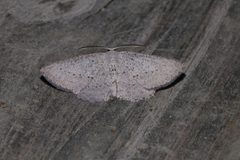
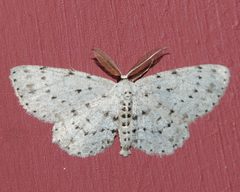
Glena is a of geometer moths in the Geometridae, established by Hulst in 1896. The genus contains approximately 40 described distributed primarily in the Americas, with documented occurrences in North America, South America, and the Caribbean. Several species have been recorded as economically significant defoliators of plantation forestry, particularly Glena bipennaria bipennaria on African mahogany (Khaya spp.) in Brazil. plant relationships vary among species, ranging from to broader associations.

Pronunciation
How to pronounce Glena: /ˈɡlɛ.nə/
These audio files are automatically generated. While they are not always 100% accurate, they are a good starting point.
Images
Habitat
varies by : Glena mielkei occurs in shrubland vegetation of the Azapa valley in northern Chile, associated with Asteraceae plants. Glena bipennaria bipennaria has been documented in commercial plantations of African mahogany (Khaya spp.) in Brazil. Other species likely occupy diverse terrestrial habitats across their geographic ranges, but specific habitat data for most species is not available.
Distribution
Primarily distributed in the Americas. Documented occurrences include: United States, Mexico, Central America, South America (Brazil, Chile, Peru, Ecuador, Colombia), and the Caribbean. Glena mielkei is restricted to northern Chile (Azapa valley). Glena bipennaria bipennaria is reported from Brazil in association with introduced African mahogany plantations.
Seasonality
Seasonal development patterns have been documented for Glena bipennaria bipennaria in Brazil, though specific timing details are not provided in available sources. Seasonality for other is not well documented.
Diet
Larval feeding habits vary by . Glena mielkei larvae feed on Asteraceae species: Trixis cacalioides, Pluchea chingollo, and Tessaria absinthioides; unable to develop on Grindelia tarapacana or Baccharis salicifolia. Glena bipennaria bipennaria feeds on foliage of African mahogany species (Khaya grandifoliola, Khaya senegalensis). Diet for remaining species is not documented.
Host Associations
- Trixis cacalioides - larval plantAsteraceae; suitable for Glena mielkei
- Pluchea chingollo - larval plantAsteraceae; suitable for Glena mielkei
- Tessaria absinthioides - larval plantAsteraceae; suitable for Glena mielkei
- Khaya grandifoliola - larval plantAfrican mahogany; for Glena bipennaria bipennaria in Brazil
- Khaya senegalensis - larval plantAfrican mahogany; for Glena bipennaria bipennaria in Brazil
Life Cycle
Complete with , larva, pupa, and stages. Larvae of Glena mielkei collected from field and successfully reared to adults in laboratory conditions on suitable plants. Larvae of Glena bipennaria bipennaria cause defoliation damage as caterpillars. Specific details on sites, adult longevity, and oviposition are not available for most .
Behavior
Larvae of Glena bipennaria bipennaria are defoliating caterpillars and were the defoliator in all examined stands of African mahogany in Brazil. Glena mielkei exhibits plant specificity with a narrow range of suitable hosts; larvae starve or die within days when placed on unsuitable host plants. potential of Glena bipennaria bipennaria remains uncertain—it is unclear whether observed represent isolated incidents or will become more frequent.
Ecological Role
Herbivorous insects with variable impacts. Glena mielkei functions as a herbivore dependent on native vegetation composition in northern Chile, potentially serving as an indicator of quality given its sensitivity to plant availability. Glena bipennaria bipennaria acts as a pest in plantation forestry, causing defoliation of economically important African mahogany trees. Natural enemies including have been documented for G. b. bipennaria.
Human Relevance
Glena bipennaria bipennaria has emerged as a pest of African mahogany (Khaya spp.) plantations in Brazil, causing defoliation in commercial stands. This represents a potential economic concern for plantation forestry. No other direct human interactions are documented. The is primarily of scientific interest for studies of plant relationships and diversity in the Americas.
Similar Taxa
- Other Geometridae genera in EnnominaeSimilar wing patterns and body form; identification to requires examination of genitalia and specific wing venation characters not visible in field observations
- Apatelodes pandaraCo-occurs as defoliator on Khaya senegalensis in Brazil; belongs to Apatelodidae rather than Geometridae, distinguished by different larval and wing structure
More Details
Taxonomic history
The was established by George Duryea Hulst in 1896. Many were described by Rindge in the 1960s, with additional species described more recently including Glena mielkei (Vargas, 2010) from northern Chile.
Research gaps
plant relationships are documented for only two (G. mielkei and G. bipennaria bipennaria). details, seasonal , and ecological interactions remain unknown for the majority of described species.
Sources and further reading
- BugGuide
- Wikipedia
- GBIF taxonomy match
- iNaturalist taxon
- NCBI Taxonomy
- Catalogue of Life
- The Best of Denver: What to See and How to Get There During Entomology 2017
- Glena bipennaria bipennaria and Apatelodes pandara (Lepidoptera): new defoliating insects associated with Khaya in Brazil Glena bipennaria bipennaria e Apatelodes pandara (Lepidoptera): novos insetos desfolhadores associados a Khaya no Brasil
- Host plant specificity of the moth species Glena mielkei (Lepidoptera, Geometridae) in northern Chile