
Cymatophora approximaria
Hübner, 1812
Giant Gray Moth
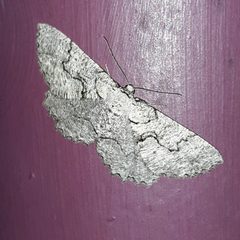
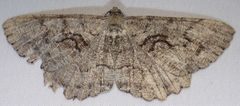
A large geometrid native to North America, notable for its substantial size and muted gray coloration. are active during warmer months and are attracted to light. The is relatively well-documented through citizen science observations.
Pronunciation
How to pronounce Cymatophora approximaria: //ˌsaɪ.məˈtɒf.ə.rə əˌprɒksɪˈmeɪ.ri.ə//
These audio files are automatically generated. While they are not always 100% accurate, they are a good starting point.
Identification
Distinguished from other North American geometrids by its large size combined with uniformly gray, non-angular wing margins. Similar in the *Hyppa* are smaller with more contrasting pattern elements. *Cymatophora approximaria* lacks the prominent eyespots or sharp wing angles seen in many related Ennominae. The overall 'plain' gray appearance at large size is diagnostic in most of its range.
Images
Habitat
Deciduous and mixed forests, particularly areas with oak and other hardwood trees. Also found in suburban and rural settings with mature trees. frequently encountered near outdoor lighting in wooded neighborhoods.
Distribution
Eastern and central North America, from southern Canada through the eastern United States. Records span from Ontario and Quebec south to Florida, west to Texas and the Great Plains.
Seasonality
active primarily from late spring through early autumn, with peak activity during summer months (June–August in most of range). Multiple possible in southern portions of range.
Behavior
are and strongly attracted to artificial light sources. They are relatively sluggish fliers compared to smaller geometrids and often rest with wings spread flat or slightly tented.
Ecological Role
Larval stage functions as a folivore on hardwood trees; specific plant relationships require further documentation. serve as prey for including bats and birds.
Human Relevance
Occasional minor nuisance at outdoor lighting. No significant economic or ecological impact documented. Frequently photographed and reported by citizen scientists, contributing to public engagement with diversity.
Similar Taxa
- Hyppa xylinoidesSimilar gray coloration but smaller (wingspan ~30–40 mm) with more contrasting dark pattern elements and more angular forewing apex
- Acronicta speciesSome gray noctuid overlap in size, but have more robust bodies, different resting posture, and often show more contrasting pattern elements