
Mathildana newmanella
(Clemens, 1864)
Newman's Mathildana Moth
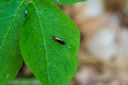
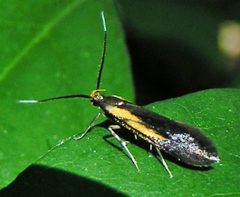
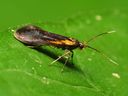
Mathildana newmanella is a small concealer in the Oecophoridae, originally described as Dasycera newmanella by Clemens in 1864. It is sometimes mistaken for fairy moths (family Adelidae) due to superficially similar coloration, though it lacks the extraordinarily long characteristic of that family. The has been recorded primarily from the eastern United States.
Pronunciation
How to pronounce Mathildana newmanella: /məˈθɪldənə ˌnjuːməˈnɛlə/
These audio files are automatically generated. While they are not always 100% accurate, they are a good starting point.
Identification
Distinguished from similar-looking fairy moths (Adelidae) by length: Mathildana newmanella has relatively short antennae compared to the extremely long antennae (especially in males) of Adelidae . The has a dark metallic luster. Specific morphological details beyond general coloration are not well documented in available sources.
Images
Distribution
Eastern United States. Specific records include Vermont and Missouri.
Seasonality
have been observed in spring; one record notes late April activity.
Human Relevance
Occasionally encountered by naturalists and photographers; noted in blog discussions as a that can be confused with the more visually striking fairy moths (Adelidae).
Similar Taxa
- Adela caeruleellaSimilar coloration and small size; distinguished by Adelidae's characteristically long (up to 3× forewing length in males) versus M. newmanella's shorter antennae
- Adela ridingsellaSimilar coloration and small size; distinguished by Adelidae's characteristically long versus M. newmanella's shorter antennae
Misconceptions
Sometimes mistaken for fairy moths ( Adelidae) due to similar coloration, but belongs to the concealer family Oecophoridae and lacks the diagnostic extremely long of Adelidae.