
Mompha epilobiella
Römer, 1794
Common Cosmet
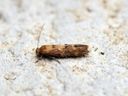
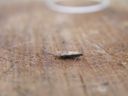
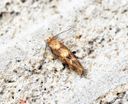
Mompha epilobiella is a small in the Momphidae with a Holarctic distribution. have a wingspan of 10–13 mm and ochre-coloured forewings with distinctive dark tufts. The is multivoltine, with adults active throughout the year and most abundant in July and August. Larvae feed primarily on great willowherb (Epilobium hirsutum), with young stages as leaf miners and older larvae living communally in spun terminal leaves.
Pronunciation
How to pronounce Mompha epilobiella: /ˈmɒmfə ˌɛpɪloʊbiˈɛlə/
These audio files are automatically generated. While they are not always 100% accurate, they are a good starting point.
Identification
Distinguished from the similar Mompha subbistrigella by male genitalia: M. epilobiella males have a shortened saccule with small teeth and a hook-shaped cornutus on the , whereas M. subbistrigella lacks these features. Forewing pattern with two dark tufts and indistinct yellow spots also aids identification. Genitalia examination is required for reliable separation of these .
Images
Habitat
Associated with willowherb stands in varied open and semi-open including wetlands, riverbanks, meadows, and disturbed ground where plants grow.
Distribution
Holarctic: recorded throughout Europe and in North America including Ontario and the Pacific Northwest region of the United States.
Seasonality
active throughout the year; peak abundance in July and August in Great Britain.
Diet
Larvae feed primarily on great willowherb (Epilobium hirsutum). Recorded on additional Epilobium (Chamerion angustifolium, E. montanum, E. palustre) and Oenothera species, though these may represent misidentifications or secondary .
Host Associations
- Epilobium hirsutum - primary larval main food plant
- Chamerion angustifolium - larval recorded but possibly misidentification
- Epilobium montanum - larval recorded but possibly misidentification
- Epilobium palustre - larval recorded but possibly misidentification
- Oenothera - larval -level record, possibly misidentification
Life Cycle
Young larvae are leaf miners. Older larvae live communally in spun uppermost leaves of the plant. emerge year-round with seasonal peaks.
Behavior
Older larvae exhibit communal living in spun terminal leaves. are and attracted to light.
Ecological Role
Herbivore specializing on willowherbs; serves as for in the Pacific Northwest.
Human Relevance
No significant economic or cultural importance documented.
Similar Taxa
- Mompha subbistrigellaExtremely similar external appearance; distinguished reliably only by male genitalia structure (saccule length and cornutus shape) and female bursa duct
More Details
Taxonomic authorship note
NCBI lists authority as (Denis & Schiffermüller, 1775) with basionym Tinea epilobiella, while Catalogue of Life and other sources use Römer, 1794. The earlier authorship under Tinea may represent the original description, with Römer's 1794 combination under Mompha establishing the current name.
Larval behavior
The shift from solitary leaf-mining in early instars to communal web-spinning in later instars represents a notable behavioral transition within the ' development.