
Mompha
Hübner, 1825
Species Guides
37- Mompha achlyognoma
- Mompha albapalpella
- Mompha albocapitella(White-based Mompha)
- Mompha annulata(Perimede annulata)
- Mompha argentimaculella
- Mompha bicristatella
- Mompha bottimeri(Bottimer's Mompha)
- Mompha brevivittella
- Mompha capella
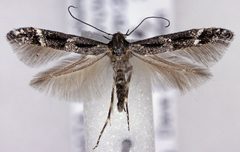
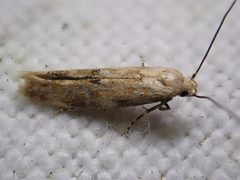
Mompha is a of microlepidopteran in the Momphidae, first described by Jacob Hübner in 1819. The genus contains four subgenera: Anybia, Cyphophora, Lophoptilus, and Psacaphora. in this genus are specialized plant , with larvae exhibiting diverse feeding modes including leaf mining, flower and fruit feeding, and gall formation. The genus shows remarkable diversification driven primarily by shifts in plant tissue type rather than host plant family alone.
Pronunciation
How to pronounce Mompha: //ˈmɒmfə//
These audio files are automatically generated. While they are not always 100% accurate, they are a good starting point.
Identification
Members of Mompha are small (microlepidoptera) typically requiring dissection of genitalia for definitive -level identification. using oxidase 1 (COI) sequences can assist identification, though barcode reference libraries remain incomplete for this diverse . Larvae are nondescript and often difficult to identify morphologically; genitalia structure provides the most reliable diagnostic characters.
Images
Habitat
are defined by plant distribution. occur in diverse environments including coastal dunes, southwestern USA deserts, tropical forests of Central and South America, and temperate regions of Europe and North America. Many species are associated with Onagraceae (evening primrose ) plants, with others specialized on Melastomataceae, Rubiaceae, and additional plant families.
Distribution
Widespread across multiple continents including North America (USA, including Pacific Northwest and southwestern states; Canada), Central America ( Rica), South America, Europe (including Denmark, Norway, Sweden), and Asia (northeast India, Assam). Specific distributions vary; some are geographically restricted while others have been introduced to new regions.
Diet
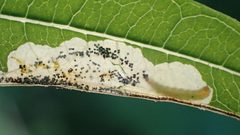
Larval feeding is phytophagous and highly specialized. Documented feeding modes include: leaf mining (ancestral state for the ), flower and fruit feeding, external feeding on terminal shoots, and gall formation. Specific documented include Miconia calvescens (fruits), Camissoniopsis cheiranthifolia (flower buds), Ludwigia adscendens (leaves and shoots), and various Onagraceae .
Host Associations
- Miconia calvescens - fruit-feeding Mompha luteofascia larvae feed on fruits; up to 38.1% fruit observed in Rica
- Camissoniopsis cheiranthifolia - floral on flower buds; coastal dune
- Ludwigia adscendens - leaf mining and external feeding larvae mine leaves then feed externally on terminal shoots; laboratory rearing possible on Oenothera rosea, L. perennis, and L. octovalvis
- Onagraceae (family) - primary majority of associated with this ; includes leaf mining, flower feeding, and fruit feeding
- Melastomataceae (family) - galling clade specialized on this
- Rubiaceae (family) - leaf mining documented on this
Life Cycle
For Mompha ludwigiae: laid over 3–7 days (up to 150 eggs per female); development from egg to takes 3–5 weeks. Larvae pass through three instars. For Mompha luteofascia: three larval instars determined from capsule measurements; larvae usually solitary per fruit; exit fruit to pupate in foliage or litter. occurs in pupal cocoons.
Behavior
Larvae typically solitary feeders. Mompha luteofascia larvae exit fruits to pupate in surrounding foliage or leaf litter. High rates documented: 64% and 38% at two Rican sites for M. luteofascia; Eulophid Euryscotolinx sp. bred from M. ludwigiae pupal cocoons.
Ecological Role
plant that can significantly impact plant reproductive success. Mompha luteofascia feeding reduces seed numbers and germination rates in Miconia calvescens: undamaged fruits averaged 127 seeds with 34.8% germination, versus 96 seeds with 1.9% germination (medium damage) and 99 seeds with 0.1% germination (high damage). Potential as agent for plants, particularly Miconia calvescens and Ludwigia adscendens.
Human Relevance
Evaluated as potential agents for plant . Mompha luteofascia under assessment for control of Miconia calvescens (invasive in Hawaii and other Pacific islands). Mompha ludwigiae identified as potential agent for biological control of Ludwigia adscendens. Mompha epilobiella introduced to Pacific Northwest, representing potential non-native species of interest.
Similar Taxa
- Other Momphidae generaMompha is distinguished by four subgenera (Anybia, Cyphophora, Lophoptilus, Psacaphora) and specific associations; other in lack this subgeneric structure and show different host patterns
- ColeophoridaeMompha was historically classified in Coleophoridae; molecular and morphological analysis confirm placement in separate Momphidae
- Other microlepidopteran leaf minersLarval leaf mining convergent across multiple ; definitive identification requires genitalia dissection or
More Details
Subgeneric classification
Four subgenera recognized: Anybia (type Tinea langiella), Cyphophora (largest species in ; type species Elachista idaei), Lophoptilus (type species Lophoptilus staintoni), and Psacaphora (type species Tinea schrankella). All were originally described as separate genera and later demoted to subgeneric status.
Diversification drivers
Phylogenetic analysis reveals that shifts in exploited tissue type (leaf, flower, fruit, gall) contributed more to Mompha diversification than shifts between host plant . Four major clades identified: Onagraceae flower/fruit-feeding, Melastomataceae galling, Onagraceae/Rubiaceae leafmining, and heterogeneous multi-host clade.
Taxonomic uncertainty
Approximately 56 undescribed species-level identified in southwestern USA alone based on combined coalescent and morphological analysis. libraries remain incomplete, hampering rapid identification of larvae and .
Sources and further reading
- BugGuide
- Wikipedia
- GBIF taxonomy match
- iNaturalist taxon
- NCBI Taxonomy
- Catalogue of Life
- Combining DNA barcoding and morphological analysis to identify specialist floral parasites (Lepidoptera: Coleophoridae: Momphinae:Mompha)
- Mompha epilobiella(Momphidae), a European Moth in the Pacific Northwest, with Notes on Associated Parasitoids
- Description, Biology, and Impact of the Fruit-Feeding Moth, Mompha luteofascia sp. n. (Lepidoptera: Momphidae), on Miconia calvescens (Melastomataceae) in Costa Rica
- Diversification in the microlepidopteran genus Mompha (Lepidoptera: Gelechioidea: Momphidae) is explained more by tissue specificity than host plant family
- A new species of Mompha Hübner (Lepidoptera, Momphidae) from Assam, N.E. India, a potential agent for biological control of Ludwigia adscendens