
Scrobipalpopsis
Povolný, 1967
Species Guides
1Scrobipalpopsis is a of small in the Gelechiidae, established by Povolný in 1967. The genus contains six described distributed primarily in North America and Europe. These moths belong to the tribe Gnorimoschemini, a group known for larvae that often feed internally on plant tissues. Species within this genus are poorly known biologically, with limited documentation of their and associations.
Pronunciation
How to pronounce Scrobipalpopsis: //ˌskroʊ.biˌpælˈpɒp.sɪs//
These audio files are automatically generated. While they are not always 100% accurate, they are a good starting point.
Identification
Distinguished from related in Gnorimoschemini by genitalic characters, particularly male valvae and female signum structure. External overlaps substantially with Scrobipalpa and related genera; dissection and microscopic examination required for reliable identification. -level identification depends on forewing pattern, genitalia, and geographic distribution.
Images
Appearance
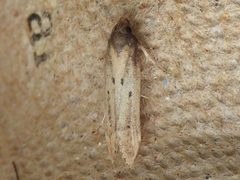
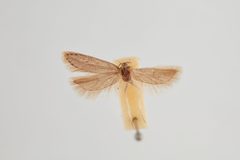
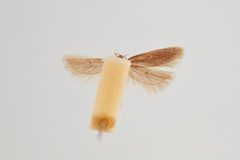
Small with wingspan typical of gelechiid moths (generally under 20 mm). Forewings narrow and elongated with characteristic patterning of the Gnorimoschemini tribe. Hindwings narrower than forewings with reduced venation. Body slender with scaled and . Specific coloration and wing pattern vary by .
Habitat
Associated with herbaceous vegetation in open . Specific microhabitat preferences documented for few ; S. petasitis associated with Petasites (butterbur) in riparian and wetland margins.
Distribution
Recorded from Norway, Sweden, and North America (United States and Canada). Distribution data sparse; most records concentrated in western North America and northern Europe.
Seasonality
activity varies by and latitude. S. petrella and S. tetradymiella active in spring and early summer in western North America. European species poorly documented.
Host Associations
- Petasites - larval S. petasitis associated with butterbur
- Arnica - larval S. arnicella associated with arnica
- Tetradymia - larval S. tetradymiella associated with horsebrush
- Madia - larval S. madiae associated with tarweed
Life Cycle
Complete with , larva, pupa, and stages. Larvae are internal feeders in stems, roots, or flower of plants. occurs in silk-lined chambers within host tissue or in soil. Specific developmental details unknown for most .
Behavior
are and attracted to light. Larval characterized by concealed feeding within plant tissues, typical of Gnorimoschemini. No other behaviors documented.
Ecological Role
Larvae act as herbivores, potentially influencing plant through tissue mining or gall-like feeding. Specific ecological impacts unstudied. may serve as prey for .
Human Relevance
No documented economic importance. S. petasitis occasionally noted in Europe where Petasites is cultivated or . Not considered a significant pest.
Similar Taxa
- ScrobipalpaOverlapping external and genitalic structure; distinguished by specific valvae and signum characters
- EphysterisSimilar size and wing shape; requires genital dissection for separation
- GnorimoschemaShared tribe Gnorimoschemini; similar larval habits and appearance
More Details
Taxonomic History
Originally described by Povolný in 1967 to accommodate previously placed in other . The genus has undergone limited revision; species boundaries and relationships within Gnorimoschemini remain incompletely resolved.
Research Needs
of most undocumented. Larval descriptions, ranges, and stages unknown for S. interposita and S. madiae. Molecular data lacking for phylogenetic placement.