Gnorimoschema terracottella
Busck, 1900
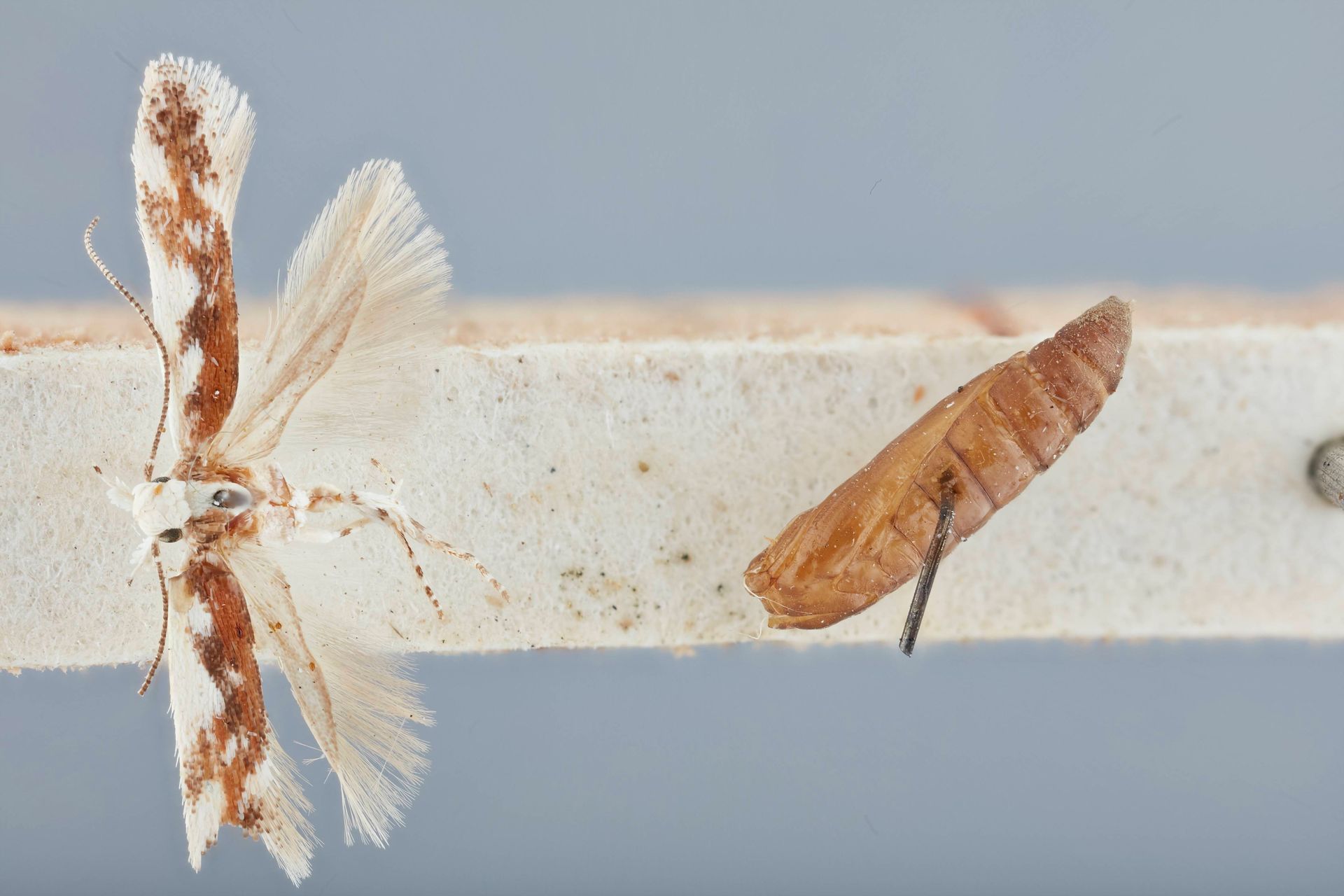
Gnorimoschema terracottella is a small gelechiid described by August Busck in 1900. The is characterized by distinctive reddish-brown forewings with complex white patterning and dark dusting. Its larvae are leaf miners on Iva imbricata, a composite plant in the southeastern United States. The species is known from only two states, Florida and Alabama, and is one of approximately 100 described species in the Gnorimoschema.
Pronunciation
How to pronounce Gnorimoschema terracottella: /ɡnɔɹɪmoʊˈʃiːmə ˌtɛɹəkɒtˈɛlə/
These audio files are automatically generated. While they are not always 100% accurate, they are a good starting point.
Identification
Distinguished from other Gnorimoschema by the unique forewing pattern: two white costal lobes (narrow oblique and large triangular) combined with paired costal and white spots at cilia base, plus the black and purple dusting in and areas. The small size (10 mm wingspan) and southeastern U.S. distribution further narrow identification. Similar species in the lack this specific combination of white markings and dark dusting.
Images
Appearance
Small with wingspan approximately 10 mm. Forewings reddish-brown with white costal band bearing two downward-projecting lobes: first lobe narrow, pointed obliquely outward; second lobe larger and triangular, reaching to the fold. Costal white spot at beginning of cilia, with opposing white spot. Small white dot on fold beyond middle. Area between white lobes and spots, plus portion of wing, dusted with black and . Hindwings purplish grey.
Habitat
Associated with coastal or near-coastal environments where plant Iva imbricata (marsh-elder or seacoast marsh-elder) grows. This plant inhabits salt marshes, coastal dunes, and other saline or brackish wetlands in the southeastern United States.
Distribution
United States: Florida and Alabama. No records from other states or countries.
Diet
Larvae feed on Iva imbricata (Asteraceae). do not feed; mouthparts reduced or non-functional as in most Gelechiidae.
Host Associations
- Iva imbricata - larval food plantLarvae mine leaves of this
Life Cycle
stage not described. Larvae are leaf miners, feeding internally within leaves of Iva imbricata. occurs outside the mine in a slight web. timing not recorded.
Behavior
Larvae exhibit leaf-mining , creating internal tunnels within plant leaves. activity presumed based on characteristics, though not directly observed. web constructed outside the larval mine.
Ecological Role
Herbivore as larva, potentially serving as prey for and other natural enemies. No specific ecological interactions documented beyond plant relationship.
Human Relevance
No documented economic importance. Not a pest of agriculture or forestry. Potential for coastal wetland health through association with Iva imbricata .
Similar Taxa
- Other Gnorimoschema speciesMany share similar size and general wing shape, but differ in specific pattern elements; G. terracottella is distinguished by its unique combination of two white costal lobes, paired cilia spots, and black-purple dusting
- Gnorimoschema gallaesolidaginisDifferent plant (goldenrod vs. Iva), different larval habit (gall-former vs. ), different distribution (widespread in North America vs. Florida-Alabama only), and different wing pattern
More Details
Taxonomic history
Described by August Busck in 1900 based on specimens from the southeastern United States. The epithet 'terracottella' refers to the reddish-brown (terracotta) ground color of the forewings. No described.
Research significance
The Gnorimoschema has become notable in ecological research due to the unrelated G. gallaesolidaginis, which forms galls on goldenrod and has been studied for phytoscreening applications in pollution detection. However, G. terracottella is not involved in gall formation and has not been studied for this purpose.
Sources and further reading
- BugGuide
- Wikipedia
- GBIF taxonomy match
- iNaturalist taxon
- Catalogue of Life
- Blacklighting at the Bohart: They Saw the Light | Bug Squad
- Meet 'The Moth Man' at Bohart Museum's Moth Night | Bug Squad
- Gnorimoschema gallaesolidaginis Archives - Entomology Today
- How Some Insects Turn Plants Into Pollution Detectors
- goldenrod gall - Entomology Today