
Gnorimoschema octomaculella
(Chambers, 1875)
Rabbitbrush stem gall moth
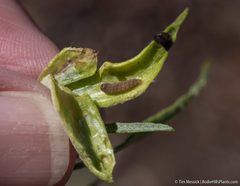
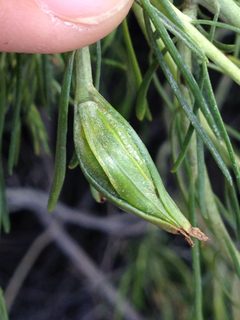
A small gelechiid described by Vactor Tousey Chambers in 1875. The larvae are gall-formers on rabbitbrush (Acamptopappus sphaerocephalus). Known from California and Washington.
Pronunciation
How to pronounce Gnorimoschema octomaculella: /ɡnɒrɪmoʊˈskɛmə ɒktoʊˌmækjʊˈlɛlə/
These audio files are automatically generated. While they are not always 100% accurate, they are a good starting point.
Identification
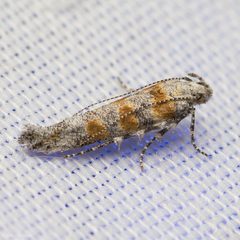
Distinguished from similar Gnorimoschema by the specific arrangement of forewing markings: the large rust-red discal spot before the middle that contacts the brown costal spot, combined with the rusty-red spot at the end of the disc and the paired dusting patches before the cilia. The association with Acamptopappus sphaerocephalus provides additional diagnostic context.
Images
Appearance
Forewings with a brown spot on the margin near the base, a large rust-red spot on the disc before the middle touching a brown costal spot placed just before it, another rusty-red spot at the end of the disc, and dense small patches of dusting before both the costal and dorsal cilia. Hindwings pale grayish fuscus.
Habitat
Associated with rabbitbrush (Acamptopappus sphaerocephalus) in dry, open where this plant occurs.
Distribution
Recorded from California and Washington in western North America.
Diet
Larvae feed on Acamptopappus sphaerocephalus (rabbitbrush), inducing gall formation in stems.
Host Associations
- Acamptopappus sphaerocephalus - plantlarval food plant; gall-forming
Life Cycle
Larvae form stem galls on the plant. Specific details of and timing are not documented.
Behavior
are attracted to ultraviolet light. Larvae are gall-formers, inducing abnormal stem growth on the plant.
Ecological Role
As a gall-former, modifies plant tissue to create protected larval chambers. The galls may accumulate soil contaminants at higher concentrations than surrounding plant tissues, though this has been demonstrated for congeneric G. gallaesolidaginis rather than this specifically.
Human Relevance
No direct economic or medical significance documented. Contributes to biodiversity of western North American fauna.
Similar Taxa
- Gnorimoschema gallaesolidaginisAlso a gall-forming Gnorimoschema , but associated with goldenrod (Solidago) rather than rabbitbrush, and produces elongate stem galls rather than the stem galls of G. octomaculella. Forewing pattern differs.
- Other Gnorimoschema speciesMany congeneric share similar size and general appearance; reliable separation requires examination of forewing spot pattern and plant association.
More Details
Taxonomic history
Originally described as Gelechia octomaculella by Chambers in 1875, later transferred to Gnorimoschema.
Gall formation
Like other members of the , larvae induce gall formation on their plant. The specific of galls produced by this on Acamptopappus sphaerocephalus has not been described in detail in available literature.
Sources and further reading
- BugGuide
- Wikipedia
- GBIF taxonomy match
- iNaturalist taxon
- NCBI Taxonomy
- Catalogue of Life
- Blacklighting at the Bohart: They Saw the Light | Bug Squad
- Meet 'The Moth Man' at Bohart Museum's Moth Night | Bug Squad
- Gnorimoschema gallaesolidaginis Archives - Entomology Today
- How Some Insects Turn Plants Into Pollution Detectors
- goldenrod gall - Entomology Today