
Dichomeris heriguronis
(Matsumura, 1931)
Black-edged Dichomeris, Black-edged Carbatina, Black-edged Dichomeris Moth
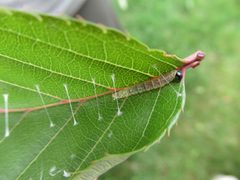
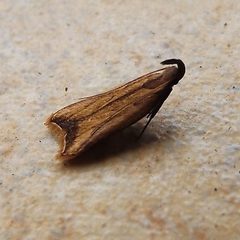
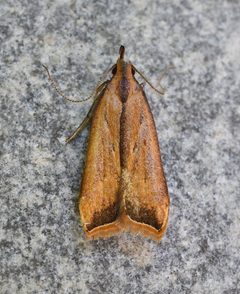
A small gelechiid with forewings measuring 7.5–8.5 mm. Native to East Asia and the northeastern United States, with established in the Netherlands. Larvae feed on Prunus in Korea.
Pronunciation
How to pronounce Dichomeris heriguronis: /daɪˈkɒmɛrɪs hɛrɪˈɡʊrənɪs/
These audio files are automatically generated. While they are not always 100% accurate, they are a good starting point.
Identification
The combination of small size (forewings 7.5–8.5 mm), black-edged forewings, and geographic location may help distinguish this from similar Dichomeris species. In the Netherlands, its status distinguishes it from native gelechiids. Specific diagnostic features beyond wing pattern are not documented in available sources.
Images
Appearance
Small with forewings 7.5–8.5 mm in length. The 'black-edged' refers to a distinctive dark marginal band on the forewings. Overall coloration and pattern details beyond the black edging are not well documented in available sources.
Distribution
Native range includes northeastern United States, Korea, Japan, China, Taiwan, and India. Established as an in the Netherlands. GBIF records confirm presence in Vermont, United States.
Diet
Larvae feed on Prunus in Korea. diet is not documented.
Host Associations
- Prunus - larval confirmed in Korea
Human Relevance
An in the Netherlands, indicating human-mediated introduction outside its native range. No other documented economic or ecological impacts.
Similar Taxa
- Other Dichomeris speciesSimilar small size and gelechiid ; distinguished by the black-edged forewing pattern and geographic distribution where known
More Details
Nomenclature
Originally described as Nothris heriguronis by Matsumura in 1931, later transferred to Dichomeris. The specific epithet 'heriguronis' derives from Japanese .
Exotic Status
The Netherlands represents a confirmed establishment, with the first recorded there as a non-native introduction.