
Dichomeris costarufoella
(Chambers, 1874)
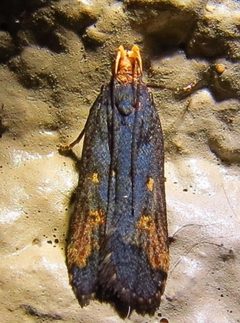
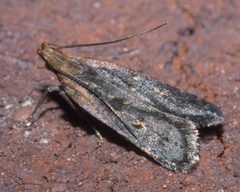
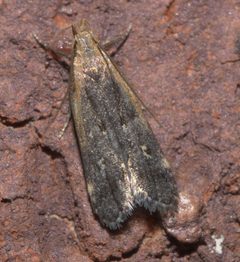
A small gelechiid with a wingspan of approximately 12 mm, characterized by dark forewings with a distinctive yellowish-brown basal patch. The was described by Vactor Tousey Chambers in 1874 and occurs across central North America. are active from spring through fall, with larvae feeding on Rudbeckia species.
Pronunciation
How to pronounce Dichomeris costarufoella: //daɪˈkɔmɛrɪs ˌkoʊstəˌrʌfoʊˈɛlə//
These audio files are automatically generated. While they are not always 100% accurate, they are a good starting point.
Identification
The combination of small size (12 mm wingspan), dark forewings with a yellowish-brown basal streak extending along the , and the specific pattern of pale spots in the and postmedial areas distinguishes this from . The pale hindwings contrast with the dark forewings. Similar Dichomeris species lack the pronounced yellowish-brown basal costal streak.
Images
Habitat
Associated with open supporting plants in the Rudbeckia, including prairies, meadows, and disturbed areas. Specific microhabitat preferences are not documented.
Distribution
Central North America: recorded from Illinois, Louisiana, Nebraska, Oklahoma, Texas, New Mexico, Arkansas, and Manitoba. Additional records from Alberta, Canada.
Seasonality
on wing from April to October, indicating a prolonged period spanning spring through fall.
Diet
Larvae feed on Rudbeckia (Asteraceae). feeding habits are not documented.
Host Associations
- Rudbeckia - larval food plant-level association; specific Rudbeckia not identified in available sources.
Similar Taxa
- Other Dichomeris speciesMany share small size and dark forewing coloration, but differ in the presence and pattern of pale markings; D. costarufoella is distinguished by the yellowish-brown basal costal streak.
More Details
Taxonomic history
Originally described as Gelechia costarufoella by Chambers in 1874, later transferred to the Dichomeris.