
Chrysoesthia drurella
(Fabricius, 1775)
Spinach moth
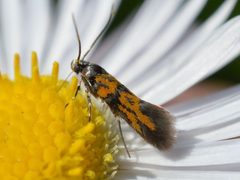
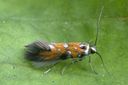
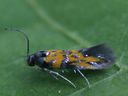
Chrysoesthia drurella is a small gelechiid with a wingspan of 7–9 mm. It is known as the spinach moth due to its larval association with Chenopodium and Atriplex plants. The has a broad distribution across Europe, Russia, and North America, and is frequently encountered in agricultural settings. It produces two annually, with active in spring and late summer.
Pronunciation
How to pronounce Chrysoesthia drurella: //ˌkrɪsoʊˈɛsθiə dɹʊˈɹɛlə//
These audio files are automatically generated. While they are not always 100% accurate, they are a good starting point.
Identification
Identifiable by its minute size (wingspan 7–9 mm) and association with Chenopodium and Atriplex plants. Distinguished from other Chrysoesthia by genitalia examination; external may require verification.
Images
Appearance
Small with wingspan 7–9 mm. Specific coloration and pattern details not documented in available sources.
Habitat
Primarily found in agricultural areas where plants Chenopodium and Atriplex occur. Associated with disturbed and cultivated supporting these plant .
Distribution
Recorded across most of Europe, Russia, and North America. Specific regional presence confirmed in Belgium with records from Brussels-Capital Region, Flemish Region, and Walloon Region.
Seasonality
: first active May–June, second generation August–September.
Diet
Larvae feed on Chenopodium and Atriplex . feeding habits not documented.
Host Associations
- Chenopodium - larval plant
- Atriplex - larval plant
Life Cycle
Two per year. Detailed , larval, and pupal stages not described in available sources.
Human Relevance
'spinach ' reflects association with Chenopodium, which includes spinach and related crops. Presence in agricultural areas suggests potential as a minor pest of cultivated Chenopodium , though economic impact not quantified.
Similar Taxa
- Other Chrysoesthia species members share small size and similar plant associations; reliable separation requires genitalia dissection or molecular analysis.
More Details
Taxonomic history
Originally described as Tinea drurella by Fabricius in 1775, later transferred to Chrysoesthia.