
Epimarptidae
Meyrick, 1914
Genus Guides
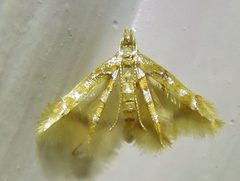
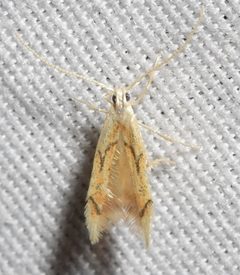
1Epimarptidae is a small of in the superfamily Gelechioidea, containing approximately six described in two : Epimarptis and Idioglossa. The family's taxonomic status has been disputed, with treatments varying between recognition as a distinct family, of Batrachedridae, or synonym of that family. Recent molecular and morphological studies have supported its restoration as a valid family. The group has a disjunct distribution spanning the Indian subcontinent, Japan, and southeastern North America.
Pronunciation
How to pronounce Epimarptidae: /ɛpɪˈmɑrptɪdiː/
These audio files are automatically generated. While they are not always 100% accurate, they are a good starting point.
Identification
Distinguishing Epimarptidae from related requires examination of genitalia and other subtle morphological characters. The family shares some traits with Batrachedridae and Coleophoridae, but the specific diagnostic features remain under study. are small with no reliably documented external characteristics that definitively separate them from similar gelechioid families without dissection.
Images
Habitat
Epimarptis have been collected at varying elevations: E. hiranoi at low altitudes in Japan, E. philocoma presumably at low elevations in India, and E. septicodes at relatively high elevations in Sri Lanka. Idioglossa miraculosa occurs in the southeastern United States. Specific preferences remain undocumented.
Distribution
India (Karnataka, Assam, southern states), Sri Lanka (Maskeliya), Japan (Honshu), and southeastern United States. Potential additional distribution in New Zealand and Australia through undescribed species or the related Houdinia flexissima.
Seasonality
Epimarptis hiranoi have been observed flying from mid-June to mid-July, with peak activity in the second half of June. Seasonal data for other are not documented.
Behavior
are . Larval has been described only for Epimarptis philocoma: larvae are reddish in color and construct a white web on the midrib of an unidentified plant. The cocoon reportedly resembles bird droppings.
Similar Taxa
- BatrachedridaeHistorically treated as synonymous or containing Epimarptidae as a ; distinguished by disputed morphological synapomorphies including genitalia structure
- ColeophoridaeIncluded within Coleophoridae sensu lato in some phylogenetic analyses; case-bearing larvae in Coleophoridae sensu stricto differ from the web-building reported in Epimarptis
- EpermeniidaeEpimarptis was originally classified here by Meyrick; distinguished by different wing venation and genitalia
More Details
Taxonomic instability
The classification of Epimarptidae has shifted repeatedly: recognized as by Meyrick (1914), transferred to Epermeniidae (1917), restored as family by Minet (1990) and Sinev (1992), treated as of Batrachedridae by Hodges (1998), synonymized with Batrachedridae by Heikkilä et al. (2014), and restored again as distinct family by Wang & Li (2020) with inclusion of Idioglossa.
Undescribed diversity
Sugisima (2004) suggested that additional Epimarptis likely exist in collections, particularly in Japan and Europe, awaiting description.