
Batrachedridae
Heinemann & Wocke, 1876
Genus Guides
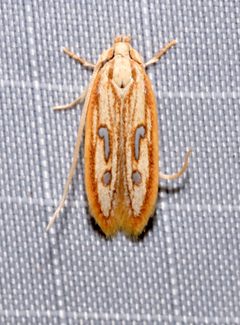
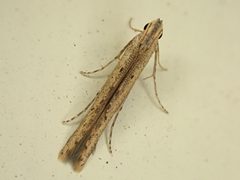
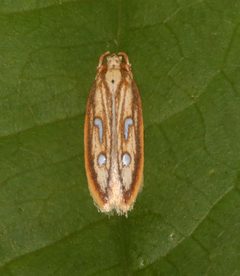
2Batrachedridae is a small of minute in the superfamily Gelechioidea. The family comprises approximately 100 in 10 worldwide, with the largest genus being Batrachedra. Taxonomic placement has been historically disputed, with the group variously treated as a family, of Gelechiidae, or subfamily of Coleophoridae. Current classifications recognize Batrachedridae as a distinct family, though phylogenetic relationships within Gelechioidea remain under investigation.
Pronunciation
How to pronounce Batrachedridae: /bætrəˈkiːdrɪdiː/
These audio files are automatically generated. While they are not always 100% accurate, they are a good starting point.
Identification
Distinguished from related Gelechioidea by combination of minute size, slender build, and resting posture with wings tightly wrapped around body. Genitalia , particularly male ampulla structure with single strong spine in some , is used for definitive identification. Separation from Coleophoridae and Gelechiidae requires examination of genitalic and larval characteristics.
Images
Habitat
varies by and . Batrachedra species occur in conifer forests ( and temperate regions) and date palm plantations. Batrachedrodes is to Hawaiian Islands where larvae feed among sporangia on underside of fern fronds. Some species associated with stored agricultural products.
Distribution
Worldwide distribution on every continent except Antarctica. Europe: three of Batrachedra. North America: at least six . Australia: three genera including Corythangela and Batrachedra (29+ species). Hawaiian Islands: two genera (Batrachedrodes, Chedra) with eight species. Asia: highest diversity of Idioglossa (five species).
Seasonality
activity varies by . Batrachedra pinicolella and B. confusella active June–August based on collection records. Specific seasonality for most species not documented.
Diet
Larvae feed on diverse : conifer needles (Picea, Pinus, Abies) for some Batrachedra ; date palms (Phoenix dactylifera) for B. amydraula; fern sporangia for Batrachedrodes. Host specificity varies; some species are monophagous while others show broader host ranges within plant .
Host Associations
- Picea abies - larval Proven for Batrachedra pinicolella
- Pinus sylvestris - larval Proven for Batrachedra confusella
- Abies alba - larval Exceptional for Batrachedra pinicolella; one proven larval record from Slovakia
- Phoenix dactylifera - larval for Batrachedra amydraula (Lesser Date )
Life Cycle
Complete with , larval, pupal, and stages. Developmental duration and survival rates temperature-dependent; studied at 25°C and 30°C for B. amydraula. Specific details vary among and are incompletely documented for most .
Behavior
Resting posture with wings tightly wrapped around body is characteristic. Larval varies: some feed on foliage or needles, others among sporangia on fern fronds, or in stored date fruits. activity presumed for based on characteristics, though specific behavioral observations are limited.
Ecological Role
Herbivores on diverse plant including conifers, ferns, and palms. Batrachedra amydraula is a significant agricultural pest of date palms in storage and field conditions. Role in natural poorly documented; likely contributes to nutrient cycling as primary consumers.
Human Relevance
Batrachedra amydraula (Lesser Date ) is an economically important pest of date palms (Phoenix dactylifera), causing damage in silos, storages, and plantations. Chemical control methods including aluminium phosphide and magnesium phosphide have been developed for management. Batrachedra pinicolella and related may impact conifer forestry, though economic significance is limited compared to other forest pests.
Similar Taxa
- ColeophoridaeHistorically confused; Batrachedridae treated as Batrachedrinae of Coleophoridae in some classifications. Separated based on genitalic and larval .
- GelechiidaePreviously classified as Momphinae of Gelechiidae by Zimmerman (1978). Distinguished by resting posture, genitalic features, and larval associations.
- EpimarptidaeTreated as Epimarptinae of Batrachedridae by Hodges (1999), but restored as separate by some authors. Relationship disputed; synapomorphies used to unite groups have been questioned.
- Pterolonchidae Homaledra and Houdinia moved from Batrachedridae to Pterolonchidae in 2014 based on phylogenetic analysis; previously classified in Batrachedridae.
Misconceptions
The has been repeatedly reclassified, leading to confusion in literature. Not all sources agree on family boundaries: some treatments include Epimarptis and Idioglossa, others exclude them. The name Batrachedrae (Heinemann & Wocke, 1876) is an earlier spelling variant, not a separate . Cryptic is now recognized; Batrachedra pinicolella was recently split into two based on integrative .
More Details
Taxonomic instability
Classification has changed repeatedly since 1876: Batrachedridae (1876, 1978, 1999, 2003), Batrachedrinae of Gelechiidae (1978), subfamily Batrachedrinae of Coleophoridae (1983), and various interpretations of subfamily vs. family rank. Current consensus treats Batrachedridae as distinct family, though phylogenetic relationships remain under investigation.
Cryptic diversity
Integrative using , nuclear markers, and has revealed overlooked -level diversity. Batrachedra pinicolella was split into two species (B. pinicolella and B. confusella) based on genetic, morphological, and ecological differences, with different conifer .
Endemic radiations
Notable radiations include Batrachedrodes (6 , Hawaiian Islands only) and Houdinia (, New Zealand; moved to Pterolonchidae in 2014).
Sources and further reading
- BugGuide
- Wikipedia
- GBIF taxonomy match
- iNaturalist taxon
- NCBI Taxonomy
- Catalogue of Life
- Chemical control of the Lesser Date Moth, Batrachedra amydraula (Lepidoptera: Batrachedridae)
- Integrative taxonomy reveals overlooked cryptic diversity in the conifer feeding Batrachedra pinicolella (Zeller, 1839) (Lepidoptera, Batrachedridae)
- Biology, morphology and taxonomy of Lesser Date Moth, Batrachedra amydraula (Lepidoptera: Batrachedridae) under two different temperatures