
Idioglossa miraculosa
(Frey & Boll, 1878)
A small in the Epimarptidae, described in 1878. It is known from the southeastern United States, with larvae that feed on Dichanthelium clandestinum by skeletonizing leaves. Multiple occur annually.
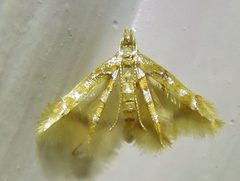
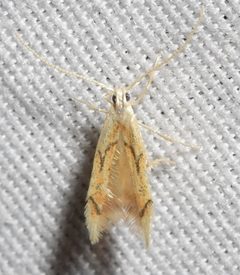
Pronunciation
How to pronounce Idioglossa miraculosa: /ˌɪdi.oʊˈɡloʊsə ˌmɪrəˈkjuːloʊsə/
These audio files are automatically generated. While they are not always 100% accurate, they are a good starting point.
Identification
Small size (10 mm wingspan) and association with Dichanthelium clandestinum plants may aid identification. placement in Epimarptidae distinguishes it from superficially similar gelechioid moths in other families.
Images
Appearance
Wingspan approximately 10 mm. Specific coloration and pattern details are not documented in available sources.
Habitat
Associated with supporting its plant Dichanthelium clandestinum, a grass found in woodland openings and moist areas.
Distribution
Southeastern United States: recorded from Illinois, Ohio, Tennessee, North Carolina, Texas, and Florida.
Seasonality
Two to three per year, with activity spanning multiple months.
Diet
Larvae feed on Dichanthelium clandestinum, skeletonizing the leaves. feeding habits are not documented.
Host Associations
- Dichanthelium clandestinum - larval Larvae skeletonize leaves
Life Cycle
Two or three per year. Specific details of , pupal, and longevity are not documented.
Behavior
Larval feeding involves skeletonizing leaves of the plant, consuming tissue between leaf .
Ecological Role
Herbivore; larval feeding may influence plant leaf condition in localized .
Human Relevance
No documented economic or cultural significance. Occasionally encountered by naturalists and enthusiasts.
Similar Taxa
- Other EpimarptidaeSimilar small size and gelechioid ; requires dissection or genital examination for definitive identification
- Small OecophoridaeHistorical placement confusion; Epimarptidae now recognized as distinct family
Misconceptions
Previously classified in Oecophoridae; modern places the in Epimarptidae.
More Details
Taxonomic history
Originally described as Metamorpha miraculosa. The Idioglossa was historically placed in Oecophoridae, but is now classified in Epimarptidae, a small of gelechioid moths.