
Psilocorsis cirrhoptera
Hodges, 1961
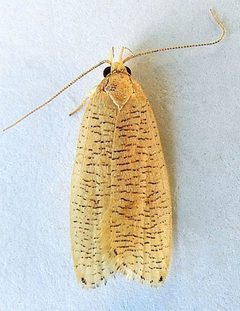
Psilocorsis cirrhoptera is a small in the Depressariidae, described by Ronald W. Hodges in 1961. It is known from Arizona, North America, where have been recorded in July. The is one of several Psilocorsis moths whose leaf-tying caterpillars are hunted by mason wasps as prey. The wingspan is approximately 19 mm.
Pronunciation
How to pronounce Psilocorsis cirrhoptera: //ˌsaɪloʊˈkɔrsɪs sɪˌroʊpˈtɪrə//
These audio files are automatically generated. While they are not always 100% accurate, they are a good starting point.
Identification
The Psilocorsis can be identified by its caterpillars' habit of tying together oak leaves to form shelters. are small in the Depressariidae. P. cirrhoptera is distinguished from by geographic distribution (Arizona) and the specific epithet reference to fringed or hairy wings (from Greek cirrho- meaning 'tawny' or 'fringed' and ptera meaning 'wings').
Images
Habitat
Associated with oak woodland , as evidenced by plant records for the . Specific microhabitat preferences for are not documented.
Distribution
Known only from Arizona, United States. The has been recorded at a limited number of localities within this state.
Seasonality
have been recorded on wing in July. No data available for other life stages or additional periods.
Life Cycle
Complete with , larva, pupa, and stages. Larval stage consists of leaf-tying caterpillars that create shelters between lashed-together oak leaves. Specific details on egg deposition, site, and stage are not documented.
Behavior
The larval stage exhibits leaf-tying , creating shelters by binding together oak leaves. behavior beyond period is not documented.
Ecological Role
Larval stage serves as prey for solitary mason wasps, including Ancistrocerus campestris and potentially Monobia quadridens. The contributes to leaf-litter formation through its feeding activities. Its role in pollination, if any, is unknown.
Human Relevance
No direct economic importance to humans. Indirectly beneficial as prey source for mason wasps that may control other caterpillar pests.
Similar Taxa
- Other Psilocorsis species share the leaf-tying larval habit and similar . P. cirrhoptera is distinguished by its Arizona distribution and specific wing characteristics.
- Gelechiidae (twirler moths)Some gelechiid caterpillars also tie leaves, but belong to a different (Gelechiidae vs. Depressariidae) with different wing venation and genitalia.
More Details
Taxonomic history
Originally described in the Amphisbatidae, which has since been synonymized with Depressariidae. Some older literature may reference this under the former family name.
Predation pressure
The Psilocorsis has been specifically documented as prey for at least two of mason wasps (Ancistrocerus campestris and Monobia quadridens), suggesting significant pressure on larval .