
Semioscopis aurorella
Dyar, 1902
Aurora Flatbody Moth
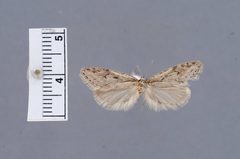
Semioscopis aurorella, the aurora flatbody , is a small moth in the Depressariidae. It was described by Harrison Gray Dyar Jr. in 1902. The occurs in and temperate regions of North America, with a range extending from north-central Alberta to south-eastern Ontario in Canada, and south into the north-central United States. Forewing length ranges from 11–14 mm.

Pronunciation
How to pronounce Semioscopis aurorella: //ˌsɛm.iˈɒs.kə.pɪs ɔːˈrɛl.lə//
These audio files are automatically generated. While they are not always 100% accurate, they are a good starting point.
Identification
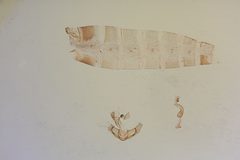
Can be distinguished from other Semioscopis by geographic range and wing measurements, though precise diagnostic characters require examination. The species name 'aurorella' (suggesting golden or dawn-like coloration) may indicate distinctive forewing markings, but this requires verification. Separation from congeneric species such as S. megamicrella and S. packardella relies on genitalic dissection or detailed wing pattern analysis.
Images
Habitat
Associated with and temperate forest across its Canadian and northern US range. Specific microhabitat preferences are not documented.
Distribution
North America: Canada (north-central Alberta, Saskatchewan, Manitoba, south-eastern Ontario), United States (south-central New York to Wisconsin, including Vermont).
Similar Taxa
- Semioscopis megamicrellaOverlapping range and similar size; distinguished by wing pattern and genitalic characters
- Semioscopis packardellaSympatric in parts of range; requires dissection or detailed pattern analysis for separation
- Other DepressariidaeShared flattened body ; distinguished by wing pattern, size, and geographic distribution
More Details
Etymology
The specific epithet 'aurorella' derives from Latin roots suggesting golden (aurum) or dawn-like (aurora) qualities, likely referring to forewing coloration.
Taxonomic history
Described by Harrison Gray Dyar Jr. in 1902, a prominent American entomologist who described thousands of Lepidoptera .