
Exaeretia ciniflonella
(Zeller, 1846)
Scotch flat-body
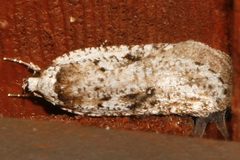
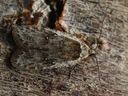
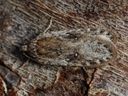
Exaeretia ciniflonella is a small in the Depressariidae with a trans-Palearctic and western Nearctic distribution. have a wingspan of 17–24 mm and are active from July through August, with individuals sometimes reappearing in early spring after . Larvae develop within rolled or folded leaves of birch, poplar, and willow.
Pronunciation
How to pronounce Exaeretia ciniflonella: /ɛkˈsaɪ.rɛ.ti.ə ˌsɪ.nə.flɒˈnɛl.ə/
These audio files are automatically generated. While they are not always 100% accurate, they are a good starting point.
Identification
May be distinguished from similar Exaeretia by combination of size (17–24 mm wingspan), geographic range, and larval association with Betula, Populus, and Salix. Accurate identification to species level typically requires dissection and examination of genitalia.
Images
Habitat
Associated with supporting larval plants: birch, poplar, and willow stands including woodlands, riparian corridors, and scrubland.
Distribution
Trans-Palearctic: Great Britain and Fennoscandia south to Italy, east through Germany, Austria, Poland, and Baltic region to eastern Palearctic. Western North America: present in western Nearctic region.
Seasonality
active July to August; overwinters as adults with occasional early spring .
Diet
Larvae feed on leaves of Betula (birch), Populus (poplar), and Salix (willow) .
Host Associations
- Betula - larval food plantlarvae feed within rolled or folded leaves
- Populus - larval food plantlarvae feed within rolled or folded leaves
- Salix - larval food plantlarvae feed within rolled or folded leaves
Life Cycle
Larval stage feeds within rolled or folded leaves of plants. occurs within larval shelter. emerge in mid-summer, overwinter, and may appear again in early spring.
Behavior
Larvae construct and feed within rolled or folded leaf shelters on plants. overwinter, suggesting cold- and potential for early season activity.
Ecological Role
Herbivore: larval feeding on deciduous tree and shrub leaves; contributes to leaf damage and nutrient cycling in plant .
Similar Taxa
- Other Exaeretia speciesMany share similar size range and flat-body ; reliable separation requires genitalia examination and geographic/ecological context.
- Depressaria speciesFormerly classified in Depressaria; similar larval habits of leaf-rolling on related plants require careful morphological distinction.
More Details
Taxonomic history
Originally described as Depressaria ciniflonella by Lienig & Zeller in 1846; later transferred to Exaeretia.
Overwintering biology
with spring re- is relatively uncommon among Lepidoptera and may represent an adaptive strategy for early-season oviposition.