
Agonopterix dimorphella
Clarke, 1941
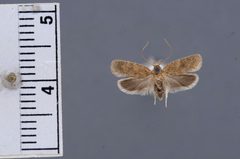
Agonopterix dimorphella is a small in the Depressariidae described by Clarke in 1941. It is found in the central and eastern United States, with records from South Carolina, Illinois, Nebraska, Kansas, and Arkansas. The has a wingspan of 11–18 mm and distinctive reddish-ocherous forewings with fuscous shading and contrasting black and yellow discal spots. Larvae feed on Amorpha fruticosa, a North American shrub in the pea family.
Pronunciation
How to pronounce Agonopterix dimorphella: /ˌæɡəˈnɒptərɪks ˌdaɪmɔːrˈfɛlə/
These audio files are automatically generated. While they are not always 100% accurate, they are a good starting point.
Identification
Distinguished from similar Agonopterix by the combination of reddish-ocherous forewings with two fuscous shades and the distinctive pattern of two black discal spots before the middle of the plus a single yellow discal spot at the end of the cell. The blackish fuscous hindwings provide additional contrast. Accurate identification may require examination of genitalia or reference to original description.
Images
Habitat
Associated with supporting its larval plant Amorpha fruticosa, which grows in prairies, open woodlands, and along stream banks. Specific microhabitat preferences for are not documented.
Distribution
North America: recorded from South Carolina, Illinois, Nebraska, Kansas, and Arkansas in the United States. The scattered records suggest a broader range in the central and eastern U.S. that remains incompletely documented.
Diet
Larvae feed on Amorpha fruticosa (false indigo bush, a Fabaceae shrub). feeding habits are not documented.
Host Associations
- Amorpha fruticosa - larval plantFabaceae shrub native to North America
Ecological Role
Larval herbivore on Amorpha fruticosa; specific ecological impacts or interactions are not documented.
Human Relevance
No documented economic or cultural significance. Not known to be a pest .
Similar Taxa
- Other Agonopterix speciesMany share similar size and general wing pattern; A. dimorphella is distinguished by the specific combination of reddish-ocherous ground color, two fuscous shades, and the distinctive black-yellow-black discal spot arrangement on forewings.
More Details
Taxonomic history
Described by John Frederick Gates Clarke in 1941 based on North American specimens. The specific epithet 'dimorphella' suggests possible reference to dimorphism, though the nature of this dimorphism (sexual or otherwise) is not detailed in available sources.