
Coleophora badiipennella
(Duponchel, 1843)
Pale Elm Case-bearer
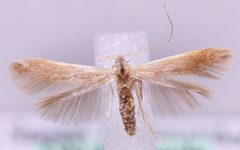
Coleophora badiipennella is a small case-bearing in the Coleophoridae, first described by Duponchel in 1843. It is widely distributed across Europe and has been introduced to North America. The is associated with several deciduous tree , particularly elms. are active in early summer.

Pronunciation
How to pronounce Coleophora badiipennella: /kəˌliːəˈfɔːrə ˌbeɪdiˌɪpɛnˈnɛlə/
These audio files are automatically generated. While they are not always 100% accurate, they are a good starting point.
Identification
Distinguished from other Coleophora by combination of pale brownish forewing coloration, small size (9–11 mm wingspan), and June–July period. Larval cases may be found on plants. Genitalia dissection is typically required for definitive identification among . Similar species include other pale Coleophora of similar size, which may require microscopic examination.
Images
Appearance
Small with wingspan of 9–11 mm. Forewings are narrow and elongated, characteristic of the Coleophora. Coloration is pale brownish (badiipennella translates to 'brownish-winged'), with subtle patterning. are long relative to body size. The slender body and pointed wing tips create a distinctive silhouette.
Habitat
Deciduous woodlands, hedgerows, parks, and urban areas where trees occur. Associated with elm-dominated but adaptable to mixed stands containing other larval host plants including hazel, blackthorn, ash, and maple.
Distribution
Native to Europe, ranging from Fennoscandia south to the Mediterranean Sea, and from Great Britain east to southern Russia. Introduced and established in North America. Records confirmed from Belgium and other European countries.
Seasonality
fly from June to July, with exact timing varying by location and latitude. Single-brooded ().
Diet
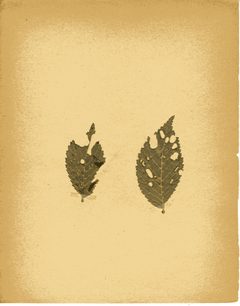
Larvae feed on leaves of Ulmus procera (English elm), Ulmus minor (field elm), Corylus (hazel), Prunus spinosa (blackthorn), Fraxinus (ash), and Acer (maple). Larval feeding involves mining leaves and constructing portable silk cases characteristic of the .
Host Associations
- Ulmus procera - larval food plantEnglish elm, primary
- Ulmus minor - larval food plantField elm
- Corylus - larval food plantHazel
- Prunus spinosa - larval food plantBlackthorn
- Fraxinus - larval food plantAsh
- Acer - larval food plantMaple
Life Cycle
Complete with four stages: , larva, pupa, . Larvae construct portable silk cases incorporating plant material, which they carry while feeding. Larval stage overwinters in case attached to plant or ground litter. occurs within the case. Single per year.
Behavior
are and attracted to light. Larvae are solitary feeders that construct and inhabit portable silk cases, enlarging them as they grow. Larvae feed by mining leaf tissue from within or near their case.
Ecological Role
and herbivore on deciduous trees. Contributes to nutrient cycling through leaf litter production. Serves as prey for including birds and . Not considered a significant pest despite broad range.
Human Relevance
Minor interest to lepidopterists. 'Pale Elm Case-bearer' reflects association with elm trees. No significant economic impact; not a forestry or horticultural pest. Presence indicates healthy deciduous woodland .
Similar Taxa
- Other Coleophora speciesMany share similar size, pale coloration, and case-bearing larval . Definitive identification often requires genitalia examination.
- Coleophora siccifoliaSimilar pale coloration and elm association; distinguished by subtle wing pattern differences and larval case structure.
More Details
Taxonomic note
Authorship sometimes cited as (Duponchel, 1844) in some sources, though original description was 1843. Basionym Ornix badii-pennella reflects earlier classification in Ornix.
Host plant breadth
Unusually broad range for Coleophora, spanning multiple tree (Ulmaceae, Betulaceae, Rosaceae, Oleaceae, Sapindaceae), suggesting ecological flexibility.