
Blastobasis
Zeller, 1855
Species Guides
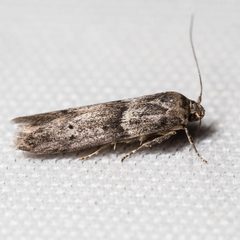
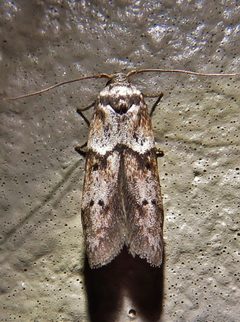
7Blastobasis is the type of the Blastobasidae (Gelechioidea), containing approximately half of all described in that family. The genus is taxonomically problematic: its monophyly is seriously doubted, with many presumed relatives separated into small or genera that may represent specialized lineages within a broader Blastobasinae . Some formerly independent genera, including Agnoea, Auximobasis, Euresia, and Zenodochium, are variably included or excluded by different authors. Species occur across multiple continents with diverse larval habits, including acorn borers in oaks and stem borers in grasses.
Pronunciation
How to pronounce Blastobasis: /ˌblæstəˈbeɪsɪs/
These audio files are automatically generated. While they are not always 100% accurate, they are a good starting point.
Identification
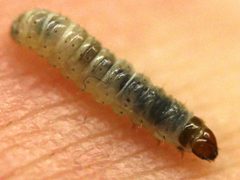
are small gelechioid moths requiring genitalia examination for reliable identification; the is morphologically heterogeneous and not reliably distinguishable from related genera without dissection. Larvae of some species can be distinguished by association and mine/bore location: B. glandulella occupies acorns of Quercus robur, while B. repartella bores in proaxis and basal nodes of switchgrass stems. B. repartella larvae may be confused with the congeneric B. graminea, which also feeds on grasses.
Images
Habitat
Highly variable by ; includes forest with oak trees (for acorn-feeding species), cultivated and natural stands of switchgrass and other grasses (for stem-boring species), and other environments where larval occur. Specific requirements differ substantially across the .
Distribution
Widespread across multiple continents. Documented from North America (including of B. glandulella), Europe (Denmark, Norway, Sweden), Ukraine, China (at least ten ), Rica, Africa (Kenya), New Caledonia, Fiji, and Beijing. Distribution varies enormously by species; no single species is .
Seasonality
periods vary by and latitude. B. glandulella in Ukraine emerges from late May to early August. Seasonality is not well documented for most species.
Host Associations
- Quercus robur L. - larval acorn borer; caterpillars develop inside acorns
- Panicum virgatum L. - larval stem borer in proaxis and basal nodes
- Citrus - larval based on Japanese Blastobasidae records, not directly confirmed for Chinese
Life Cycle
Development includes , larval, pupal, and stages. Larval habits are diverse: some bore in acorns and pupate inside them (B. glandulella), with caterpillars in fallen acorns on soil surface and in litter; others bore in grass stems (B. repartella). sites vary by feeding habit.
Behavior
-laying in B. repartella may occur in a manner that makes prescribed burns ineffective for suppression. Larval behavior is dominated by concealed feeding in plant tissues (acorns, stems).
Ecological Role
Larval herbivores with concealed feeding habits; some are potential forestry or agricultural pests. B. glandulella is considered potentially dangerous for forestry in invaded regions. B. repartella is a potential pest of switchgrass grown for production. Bassus difficilis (Hymenoptera: Braconidae) has been reported as a larval/pupal of B. repartella.
Human Relevance
Several are of economic concern. B. glandulella, in Ukraine from North America, threatens oak forestry. B. repartella damages switchgrass, a crop cultivated for bioenergy. The has been subject to extensive taxonomic study due to its problematic species boundaries and agricultural significance.
Similar Taxa
- HolcoceraRelated in Blastobasidae/Blastobasinae; distinguished by lineage-based criteria that remain taxonomically unresolved
- Blastobasis graminea that also feeds on grasses; B. repartella distinguished by larval and specific stem-boring location in switchgrass
- Agnoea, Auximobasis, Euresia, ZenodochiumSometimes included in Blastobasis, sometimes treated as distinct ; boundaries not well resolved
Misconceptions
The -level placement of Blastobasis has been unstable: sometimes placed in Blastobasidae, sometimes as Blastobasinae within Coleophoridae (case-bearer family). This does not reflect disagreement about the itself but varying treatments of family rank in Gelechioidea.
Sources and further reading
- BugGuide
- Wikipedia
- GBIF taxonomy match
- iNaturalist taxon
- NCBI Taxonomy
- Catalogue of Life
- Symptoms, Distribution and Abundance of the Stem-Boring Caterpillar, Blastobasis repartella (Dietz), in Switchgrass
- New data on distribution and biology of Blastobasis glandulella (Riley, 1871) (Lepidoptera: Blastobasidae) in Ukraine
- Taxonomic study of the genus Blastobasis Zeller, 1855 (Lepidoptera: lastobasidae) from China, with descriptions of six new species
- Descriptions of life-stages of Blastobasis repartella (Lepidoptera: Gelechioidea: Coleophoridae: Blastobasinae) and observations on its biology in switchgrass