
Carmenta pyralidiformis
(Walker, 1856)
Boneset Borer, Boneset Borer Moth
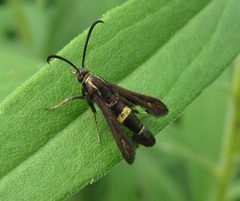
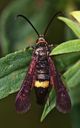
Carmenta pyralidiformis, commonly known as the boneset borer, is a clearwing moth in the Sesiidae. First described by Francis Walker in 1856, this occurs in the eastern and midwestern United States. The larvae are specialized root borers of Eupatorium species. are active during daylight hours, a trait common among clearwing moths that mimic or .
Pronunciation
How to pronounce Carmenta pyralidiformis: //kɑːɹˈmɛntə ˌpaɪˌɹælɪdəˈfɔɹmɪs//
These audio files are automatically generated. While they are not always 100% accurate, they are a good starting point.
Identification
Distinguished from other clearwing moths by combination of small size, geographic distribution, and association with Eupatorium plants. The transparent wings with dark margins separate it from most other . Within the Carmenta, specific identification requires examination of genitalia or detailed wing venation patterns. The -mimicking appearance distinguishes it from actual wasps upon close inspection.
Images
Appearance
A small clearwing moth with wingspan approximately 21 mm. Like other sesiid , the wings are largely transparent with dark borders and due to reduced scaling. The body is slender and -like, with coloration that may include dark and pale banding. The specific epithet 'pyralidiformis' refers to its resemblance to pyralid moths in overall form.
Habitat
Associated with supporting its plants Eupatorium spp., including meadows, woodland edges, and moist areas where bonesets and thoroughworts grow. The larval habitat is subterranean, within the root systems of host plants.
Distribution
Documented from Arkansas, Illinois, Maryland, Massachusetts, Michigan, Missouri, New Jersey, Ohio, and Virginia in the United States. Distribution corresponds to the range of its Eupatorium plants in eastern and midwestern North America.
Seasonality
activity period not explicitly documented in available sources; likely corresponds to flowering period of plants. As a root-boring , larvae are present subterraneanly year-round within host roots.
Diet
Larvae feed on the roots of bonesets and thoroughworts (Eupatorium spp.). feeding habits not documented.
Host Associations
- Eupatorium - larval roots of bonesets and thoroughworts
Life Cycle
Larvae are root borers, feeding internally within plant root tissue. occurs within the root or surrounding soil. emerge and are . Specific details on number of per year and stage not documented.
Behavior
are , flying during daylight hours. The -mimicking appearance likely serves as protective mimicry against . Larvae are concealed feeders within roots.
Ecological Role
As a root borer, contributes to and nutrient cycling of Eupatorium . Likely serves as prey for and , though specific relationships not documented.
Human Relevance
No documented economic or agricultural significance. The reflects its association with boneset plants (Eupatorium perfoliatum), which have historical medicinal use. Occasionally encountered by naturalists and entomologists studying clearwing moths.
Similar Taxa
- Other Carmenta speciesMany Carmenta clearwings share similar -mimicking appearance and transparent wings; require genitalia examination or plant association for definitive identification
- Sesiidae family membersAll clearwing moths share reduced wing scaling and -like appearance; distinguished by specific wing patterns, body proportions, and associations
More Details
Taxonomic note
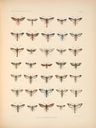
Originally described as Aegeria pyralidiformis by Walker in 1856, later transferred to Carmenta. The genus Carmenta contains approximately 100 described , primarily in the Americas, with many species poorly known and not yet barcoded.
Collection records
704 observations documented on iNaturalist as of source date, indicating moderate detectability for a clearwing moth, likely due to activity and distinctive appearance.