Carmenta prosopis
(Edwards, 1882)
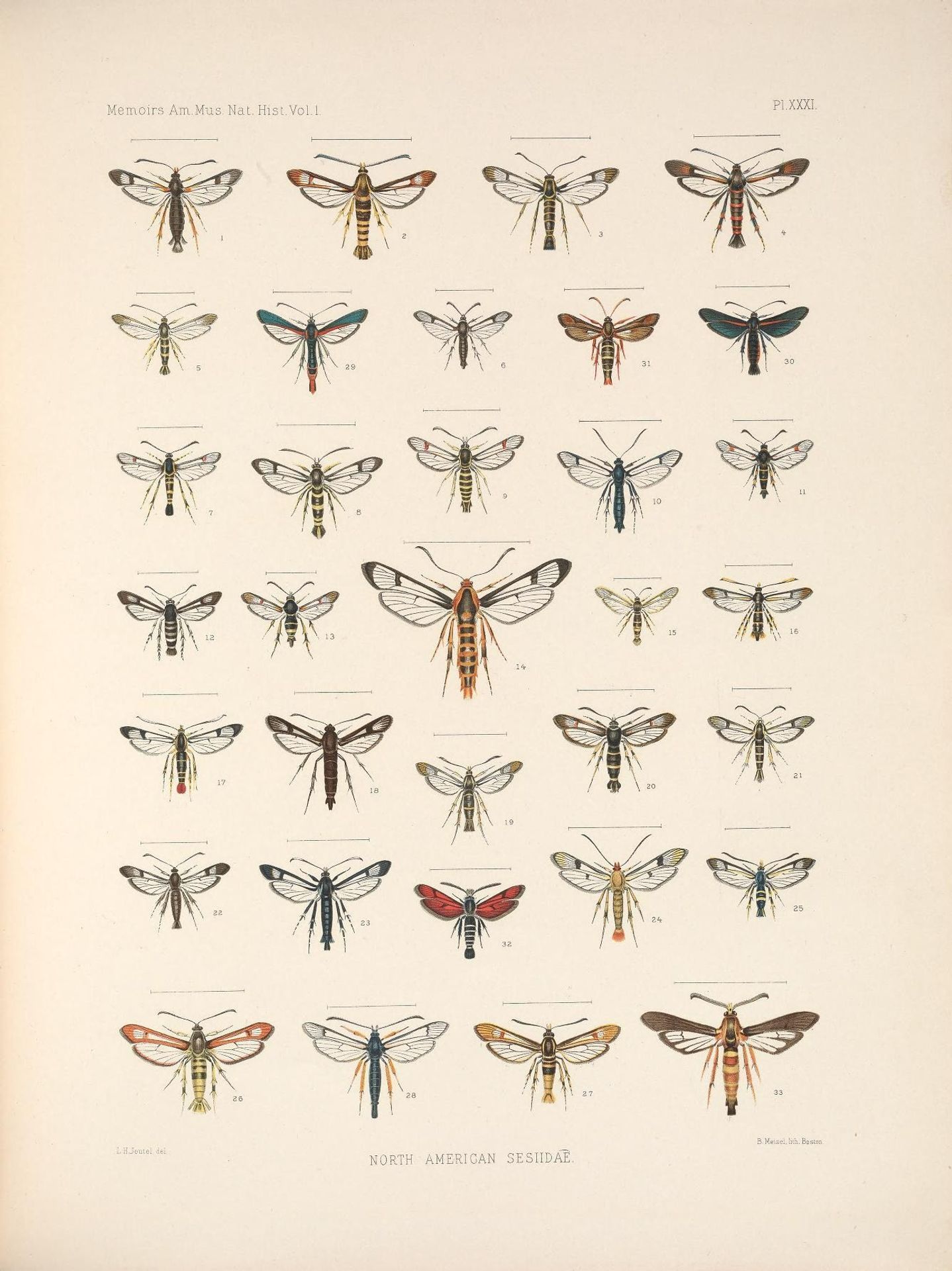
Carmenta prosopis is a clearwing moth in the Sesiidae, described by Henry Edwards in 1882. It occurs in the southwestern United States and northern Mexico. The larvae feed on mesquites (Prosopis ). As a member of the clearwing moth group, it exhibits -mimicking appearance and activity patterns typical of the family.
Pronunciation
How to pronounce Carmenta prosopis: //kɑrˈmɛn.tə prəˈsoʊ.pɪs//
These audio files are automatically generated. While they are not always 100% accurate, they are a good starting point.
Identification
Distinguished from other clearwing moths by geographic range (southwestern US and northern Mexico) and association with mesquite . Similar in the Carmenta may overlap in range; precise identification requires examination of genitalia or molecular analysis. The specific epithet 'prosopis' directly references the host plant genus, aiding in field identification where mesquites are present.
Images
Appearance
are clearwing moths with transparent wings due to reduced scaling, a characteristic feature of Sesiidae. The body is -like in form, with dark coloration and likely yellow or orange banding typical of the . Wings are narrow with dark borders and . are . may be present, with males potentially having more slender and slightly different antennae structure.
Habitat
Associated with mesquite-dominated environments, including desert scrub, semi-arid grasslands, and riparian corridors where Prosopis occur. range from lowland desert to foothill elevations in the southwestern United States and corresponding zones in northern Mexico.
Distribution
Northern Mexico and southwestern United States. Records indicate presence in arid and semi-arid regions of the Nearctic faunal region, specifically within the Sonoran and Chihuahuan Desert influences.
Diet
Larvae feed on mesquites (Prosopis ). feeding habits are unknown, though many clearwing moths visit flowers for nectar.
Host Associations
- Prosopis - larval food plantMesquites; specific Prosopis not documented
Ecological Role
Larvae function as stem or root borers in mesquite plants, potentially influencing plant growth and architecture. Role in is poorly documented but likely serve as and prey for .
Human Relevance
Minor potential as a pest of mesquite in managed settings, though not documented as economically significant. Mesquites are important forage and fuel resources in arid regions, but this has not been reported as causing notable damage.
Similar Taxa
- Other Carmenta speciesShare clearwing and -mimicking appearance; require detailed examination for separation
- Synanthedon speciesOverlapping clearwing ; distinguished by taxonomic placement and typically different associations
More Details
Taxonomic history
Originally described as Aegeria prosopis by Henry Edwards in 1882, later transferred to the Carmenta. The epithet directly references the plant genus Prosopis.
Observation rarity
Only 9 observations recorded on iNaturalist as of source date, suggesting either genuine rarity, cryptic , or under-sampling of its arid .