
Acossus populi
(Walker, 1856)
aspen carpenterworm
Acossus populi is a in the Cossidae, commonly known as the aspen carpenterworm. The has a wingspan of 50–68 mm. It is distributed across western North America, including the western United States and parts of Canada. The larvae are specialized feeders on Populus species, particularly trembling aspen (Populus tremuloides). The species was first described by Francis Walker in 1856.
Pronunciation
How to pronounce Acossus populi: /əˈkɒsəs ˈpɒpjʊlaɪ/
These audio files are automatically generated. While they are not always 100% accurate, they are a good starting point.
Identification
The can be distinguished from similar Cossidae by its specific association with aspen (Populus tremuloides) as a larval , combined with its documented western North American distribution. The Acossus is distinguished from related carpenterworm genera by genitalic and wing venation characters, though specific diagnostic features for A. populi require examination.
Images
Appearance
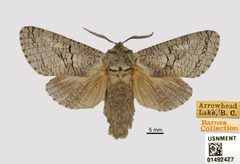
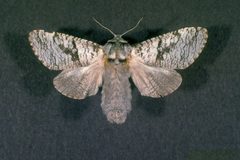
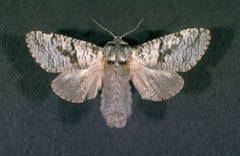
have a wingspan of 50–68 mm. As a member of Cossidae, the exhibits the characteristic robust body and relatively broad wings typical of carpenterworm moths. Detailed adult coloration and pattern are not documented in available sources.
Habitat
Associated with stands of Populus, particularly trembling aspen (Populus tremuloides), in montane and forest . The larvae inhabit the wood of living trees, creating internal galleries.
Distribution
Western North America. In the United States: Nevada, Colorado, California, and the northern Rocky Mountains. In Canada: Ontario, British Columbia, Alberta, Manitoba, and Saskatchewan.
Diet
Larvae feed on Populus , primarily Populus tremuloides (trembling aspen). No other associations have been documented.
Host Associations
- Populus tremuloides - larval primary ; larvae tunnel in wood of living trees
Life Cycle
Larvae are wood-borers that tunnel within the trunks and branches of living aspen trees. The complete duration and number of per year are not documented in available sources.
Behavior
Larvae are internal feeders, creating galleries in the wood of trees. This is characteristic of the Cossidae and distinguishes them from external-feeding Lepidoptera.
Ecological Role
As a primary wood-borer in living aspen, larvae may influence tree vigor and contribute to nutrient cycling through their tunneling activity. Specific impacts have not been quantified.
Human Relevance
The "carpenterworm" refers to the larval habit of tunneling in wood. While Populus tremuloides is commercially harvested in some regions, the economic impact of A. populi on timber or pulp production has not been assessed in available literature.
Similar Taxa
- Other Acossus species-level characters require examination; distribution and associations may provide separation where ranges overlap.
- Other Cossidae in PopulusLarval overlap occurs with some related carpenterworms; definitive identification requires morphological examination of or larvae.
More Details
Subspecies
Three are recognized: Acossus populi populi (nominate), A. p. angrezi (Bailey, 1882), and A. p. orc (Strecker, 1893). The geographic ranges and diagnostic differences among subspecies are not detailed in available sources.
Taxonomic history
First described by Francis Walker in 1856. The specific epithet 'populi' reflects the association with Populus plants.