
Choreutis diana
Hübner, 1819
Diana's choreutis moth, Inverness Twitcher
Choreutis diana is a small in the Choreutidae with a wingspan of 14–18 mm. It occurs across northern North America and most of Europe, though in Britain it is restricted to a single known site in Scotland. The exhibits distinct seasonal activity patterns that differ between regions, and its larvae are specialized leafrollers on several woody plants.
Pronunciation
How to pronounce Choreutis diana: //kɔˈreʊtɪs diˈɑːnə//
These audio files are automatically generated. While they are not always 100% accurate, they are a good starting point.
Identification
Small size (14–18 mm wingspan) distinguishes it from larger Choreutidae. In Britain, known only from Glen Affric, Highland Scotland, making geographic location a key identification cue there. Accurate identification to level likely requires genitalia examination or molecular confirmation, as visual distinction from is not documented in available sources.
Images
Appearance
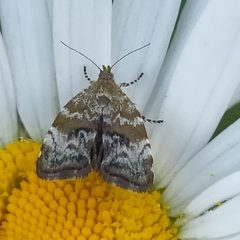
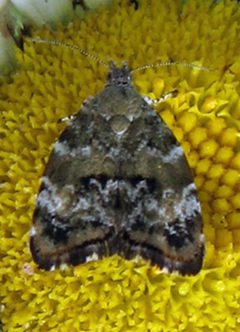
Small with wingspan 14–18 mm. Specific coloration and pattern details not described in available sources.
Habitat
Associated with stands of its larval plants: red alder (Alnus rubra), grey alder (Alnus incana), paper birch (Betula papyrifera), balsam poplar (Populus balsamifera), willow (Salix ), and cherry (Prunus species). Larvae construct silken webs on upper leaf surfaces. have been observed visiting thistle flowers.
Distribution
Northern North America and most of Europe. In Britain, restricted to a single known site at Glen Affric in the Highland region of Scotland. Distribution records include Denmark, Norway, Sweden, and Vermont (USA).
Seasonality
In Canada, active mid-April to mid-May, June, and July to September. In the United Kingdom, adults on wing in July and August. Larvae recorded mid-June to late July in North America.
Diet
Larvae feed on leaves of red alder (Alnus rubra), grey alder (Alnus incana), paper birch (Betula papyrifera), balsam poplar (Populus balsamifera), willow (Salix ), and cherry (Prunus species). feeding unknown beyond visitation to thistle flowers.
Host Associations
- Alnus rubra - larval red alder
- Alnus incana - larval grey alder
- Betula papyrifera - larval paper birch
- Populus balsamifera - larval balsam poplar
- Salix - larval willow
- Prunus - larval cherry
- Cirsium - nectar sourcethistle flowers visited by
Life Cycle
Larval stage occurs mid-June to late July in North America. Larvae are solitary leafrollers that construct silken webs on upper leaf surfaces of plants, with retained within the web. details not documented. timing varies by region.
Behavior
Larva constructs silken web on upper surface of plant leaf and remains solitary within this shelter. is caught and retained in the web. visit thistle flowers, presumably for nectar.
Ecological Role
Larva functions as a leafroller herbivore on woody deciduous plants. Role in as prey for and not documented. Contribution to nutrient cycling through leaf damage and deposition localized to individual plants.
Human Relevance
No documented economic or medical significance. Of potential interest to lepidopterists due to restricted British distribution. Not known to be a pest of cultivated plants.
Similar Taxa
- Other Choreutis speciesSimilar small size and characteristics; accurate separation requires detailed examination or genitalia dissection
More Details
Nomenclatural note
The was first described by Jacob Hübner in 1819 as Tortrix diana, later transferred to Choreutis. Some sources cite authorship as Bradley, 1961, reflecting subsequent taxonomic revision rather than original description.
Conservation status in Britain
Extremely restricted distribution with single known site makes it vulnerable to local extinction, though formal conservation assessment not documented in available sources.
Sources and further reading
- BugGuide
- Wikipedia
- GBIF taxonomy match
- iNaturalist taxon
- NCBI Taxonomy
- Catalogue of Life
- Of Tules, Cattails and Dragonflies...and on St. Pat's Day! | Bug Squad
- CLBL Event on May 15: UC Davis Medical Entomologist to Discuss Natural Mosquito Control | Bug Squad
- Don't Miss the Wetlands Restoration Exhibit | Bug Squad
- Artificial Intelligence Performs Key Step in Fruit Fly Management
- For Mass-Rearing Sterile Fruit Flies, Fewer Males Means More Efficient Mating
- Meet the Recipients of the 2021 Black in Entomology Student Prizes