Sphinx poecila
Stephens, 1828
poecila sphinx, Northern Apple Sphinx
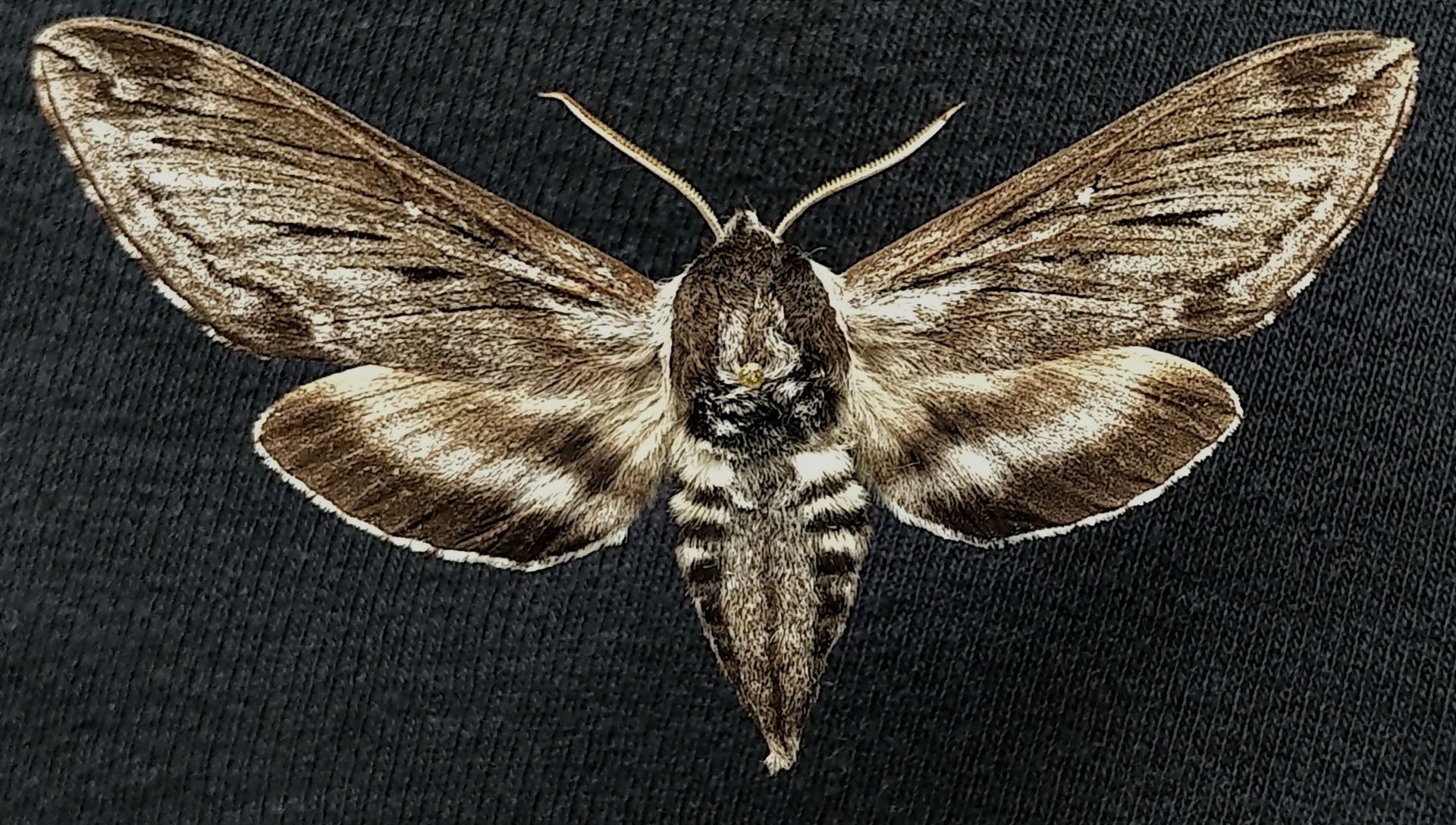
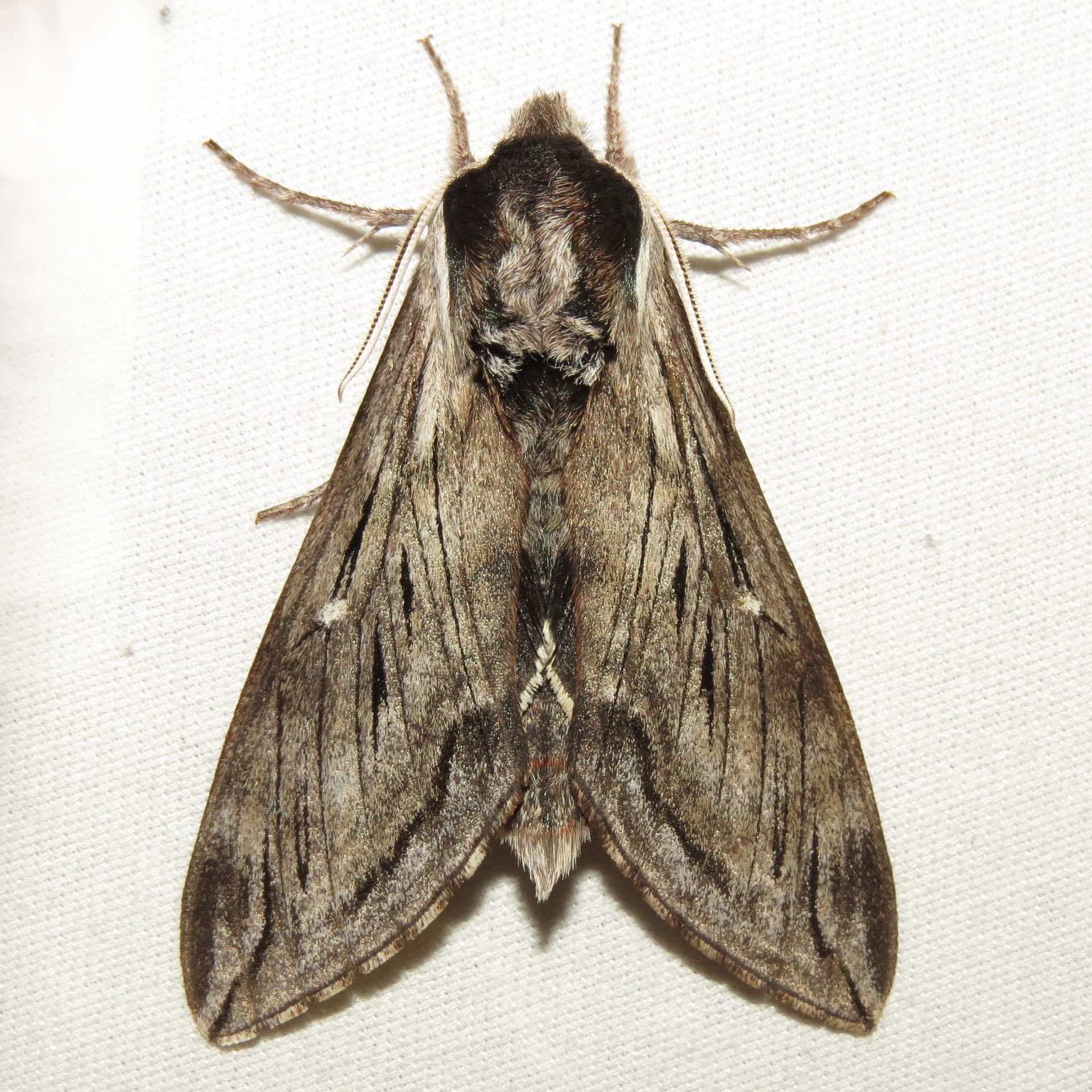
Sphinx poecila, commonly known as the poecila sphinx or Northern Apple Sphinx, is a in the Sphingidae. It is a medium-sized sphinx moth with a wingspan of 68–95 mm. The is found in northeastern North America, ranging from Newfoundland and Maine south to Pennsylvania and west to Michigan, northeastern Illinois, and Wisconsin. Larvae feed on a diverse array of plants including Rosa carolina, Picea glauca, Larix laricina, and various species in the Alnus, Malus, Myrica, and Vaccinium.
Pronunciation
How to pronounce Sphinx poecila: //ˈsfɪŋks ˈpiːsɪlə//
These audio files are automatically generated. While they are not always 100% accurate, they are a good starting point.
Identification
Distinguished from similar sphinx moths by geographic range and plant associations. The overlaps with other Sphinx species in parts of its range, but can be separated by a combination of wing pattern details and larval host preferences. may be confused with other gray-brown sphinx moths, requiring examination of genitalia or for definitive identification in some cases.
Images
Appearance
Medium-sized sphinx moth with wingspan of 68–95 mm. Forewings typically grayish-brown with darker markings. Hindwings usually paler. Body robust, typical of sphinx moths. Wing pattern provides camouflage against bark and foliage.
Habitat
Deciduous and mixed forests, woodland edges, and areas with abundant larval plants. Found in supporting Rosa carolina, various conifers, and woody shrubs in the Alnus, Malus, Myrica, and Vaccinium.
Distribution
Northeastern North America: from Newfoundland and Maine south to Pennsylvania, west to Michigan, northeastern Illinois, and Wisconsin. Present in Vermont.
Diet
Larvae feed on Rosa carolina (Carolina rose), Picea glauca (white spruce), Larix laricina (tamarack/larch), and in the Alnus (alders), Malus (apples), Myrica (bayberries), and Vaccinium (blueberries, cranberries). feeding habits not documented in available sources.
Host Associations
- Rosa carolina - larval
- Picea glauca - larval
- Larix laricina - larval
- Alnus - larval -level association
- Malus - larval -level association, includes apple
- Myrica - larval -level association
- Vaccinium - larval -level association, includes blueberries and cranberries
Life Cycle
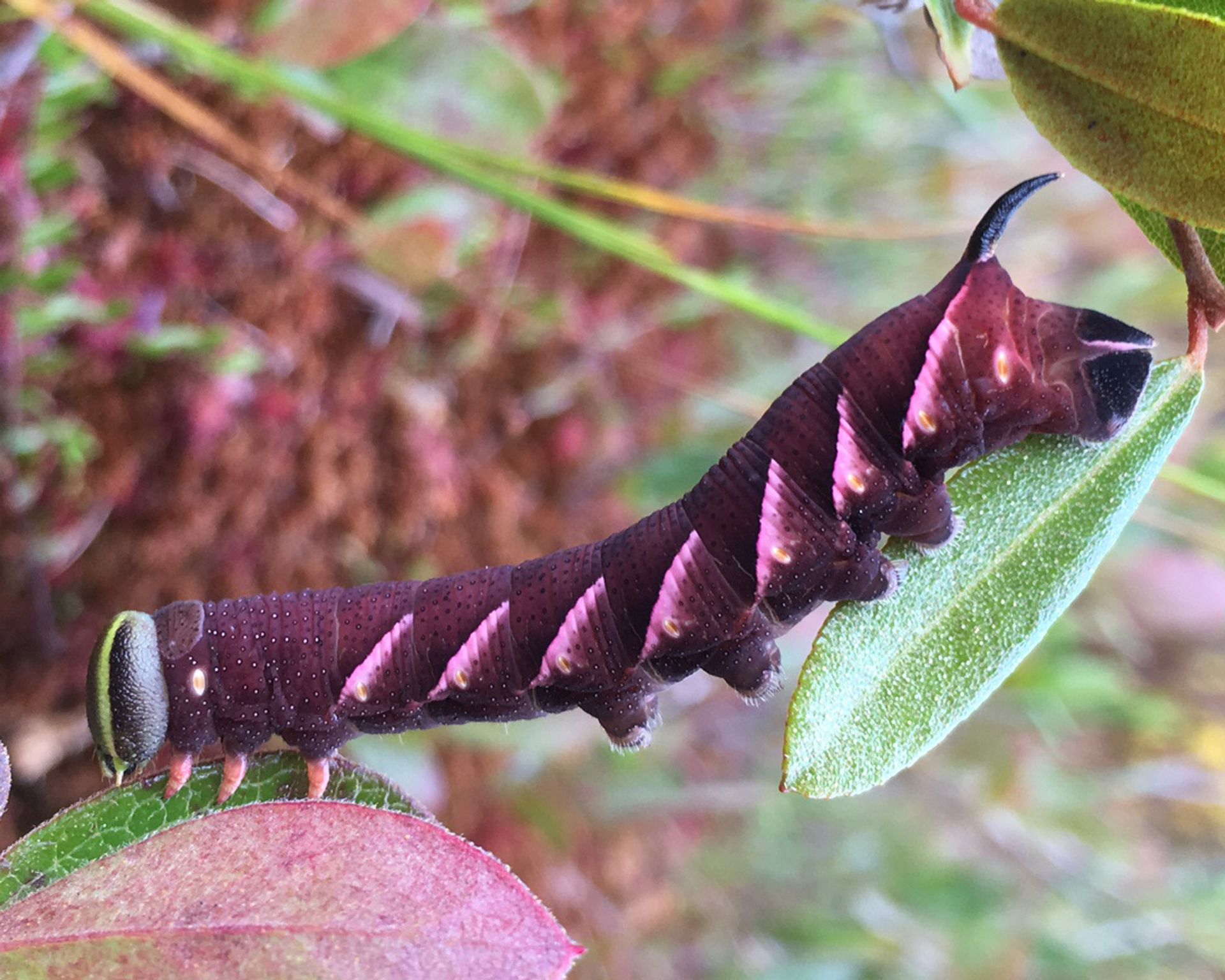
Complete with , larva, pupa, and stages. Larvae are hornworms typical of Sphingidae, with a terminal horn. occurs in soil. Number of per year not documented in available sources.
Ecological Role
Larvae function as herbivores, consuming leaves of diverse woody plants. Role in includes serving as prey for and . Contribution to pollination as not documented.
Human Relevance
Larvae feed on Malus (apple), potentially causing minor damage in orchards, though not considered a significant agricultural pest. Otherwise of limited direct economic importance.
Similar Taxa
- Sphinx kalmiaeOverlapping range in northeastern North America; both are grayish sphinx moths requiring careful examination for separation
- Sphinx chersisSimilar size and coloration; distinguished by range, associations, and subtle wing pattern differences
More Details
Taxonomic note
The 'Northern Apple Sphinx' reflects the ' association with Malus (apple) as a larval , though this is one of several host plants utilized.
Data gaps
, number of per year, and detailed information are not well documented in available sources.
Sources and further reading
- BugGuide
- Wikipedia
- GBIF taxonomy match
- iNaturalist taxon
- NCBI Taxonomy
- Catalogue of Life
- The Hornworms Are Not Your Friends | Bug Squad
- Belostomatidae | Beetles In The Bush
- Bug Eric: White-lined Sphinx ("Hummingbird Moth")
- For Ash-Dependent Insects, Some Plants Make Good Alternatives—But Others Don't
- Bug Eric: Moth Week and "Mothapalooza"
- The “black bringer of light” | Beetles In The Bush