
Sphinx kalmiae
Smith, 1797
laurel sphinx
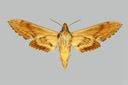
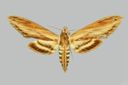
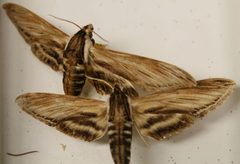
Sphinx kalmiae, commonly known as the laurel sphinx, is a hawkmoth in the Sphingidae. The was named by James Edward Smith after Kalmia, the plant on which its caterpillar was first observed. It is an ash- whose larvae feed on several plants including ash, lilac, and mountain laurel. The species conservation concerns due to the decline of ash trees from emerald ash borer invasion.
Pronunciation
How to pronounce Sphinx kalmiae: //sfɪŋks ˈkælmi.iː//
These audio files are automatically generated. While they are not always 100% accurate, they are a good starting point.
Identification
Wingspan 75–103 mm. Distinguished from similar sphinx moths by its association with ash and related plants. can be separated from by wing pattern and size, though specific diagnostic features require expert examination. The is one of several ash-feeding hawkmoths in the Sphinx, including S. chersis (great ash sphinx) and S. drupiferarum (wild cherry sphinx).
Images
Habitat
Associated with temperate forests and suburban landscapes where plants occur. Found in areas supporting Fraxinus (ash), Kalmia (mountain laurel), Syringa (lilac), and Chionanthus (fringe tree) .
Distribution
Temperate regions of the United States and southern Canada, east of the Great Plains. In the northern part of its range, also occurs west of the Rocky Mountains. Records from Manitoba, Saskatchewan, Vermont, and throughout the eastern and central United States.
Seasonality
In Canada, one per year with active June and July. Further south, two generations with adults from late May to June and again July to August. In Louisiana, up to six generations may occur.
Diet
Larvae feed on Chionanthus, Kalmia, Syringa, and Fraxinus . visit flowers for nectar, though specific floral associations are not well documented.
Host Associations
- Fraxinus americana - larval white ash, primary native
- Syringa vulgaris - larval common lilac, acceptable alternative
- Kalmia - larval mountain laurel, namesake plant
- Chionanthus - larval fringe tree
- Ligustrum vulgare - potential ecological trapEuropean privet; larvae can develop but most pupae exhibit malformed wing buds, likely non-viable
- Forsythia suspensa - larval weeping forsythia, alternative with variable success
Life Cycle
Complete with , larva, pupa, and stages. Larval development varies by plant and latitude. occurs in soil. Number of per year increases from north to south: one in Canada, two in mid-latitudes, up to six in Louisiana.
Ecological Role
herbivore dependent on ash and related Oleaceae. Serves as prey for and tachinid flies. Contributes to nutrient cycling through herbivory and serves as food source for .
Human Relevance
Subject of ecological research due to conservation concerns from ash tree decline. Named for its original discovery on cultivated Kalmia. Occasionally encountered by gardeners and naturalists.
Similar Taxa
- Sphinx chersisGreat ash sphinx; congeneric ash- with overlapping range and use, distinguished by size and wing pattern
- Sphinx drupiferarumWild cherry sphinx; similar size and appearance, but associated with Prunus rather than Fraxinus
- Ceratomia undulosaWaved sphinx; another ash-feeding sphingid, but in different with distinct wing pattern
- Sphinx ligustriPrivet hawkmoth; Eurasian sometimes confused in literature, not naturally occurring in North America
Sources and further reading
- BugGuide
- Wikipedia
- GBIF taxonomy match
- iNaturalist taxon
- NCBI Taxonomy
- Catalogue of Life
- Undergrad Thesis Scores the Cover of Environmental Entomology | Bug Squad
- The Hornworms Are Not Your Friends | Bug Squad
- Don't Miss Bohart Museum Open House on Nov. 2 | Bug Squad
- For Ash-Dependent Insects, Some Plants Make Good Alternatives—But Others Don't
- Bug Eric: White-lined Sphinx ("Hummingbird Moth")
- Bug Eric: Moth Week and "Mothapalooza"