
Sphinx drupiferarum
Smith, 1797
wild cherry sphinx
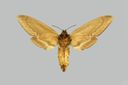
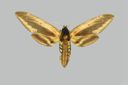
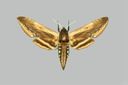
Sphinx drupiferarum, the wild cherry sphinx, is a in the Sphingidae. The was first described by James Edward Smith in 1797. It is found across temperate North America from the United States to southern Canada. The wingspan ranges from 75–115 mm. The larvae feed on several woody plant including Prunus, Malus, and Celtis.
Pronunciation
How to pronounce Sphinx drupiferarum: //ˈsfɪŋks druːˌpɪfɛˈreɪrəm//
These audio files are automatically generated. While they are not always 100% accurate, they are a good starting point.
Identification
A large sphinx moth with wingspan 75–115 mm. Distinguished from similar Sphinx by geographic range and plant associations. The specific epithet drupiferarum (meaning 'bearing drupes') references its association with stone fruit trees in the Prunus. fly in June–July in Canada, with two in southern parts of the range.
Images
Habitat
Temperate regions of North America. Associated with containing plants including wild cherry (Prunus serotina), apple (Malus), and hackberry (Celtis occidentalis).
Distribution
Temperate parts of the United States to southern Canada. Specific records include Alberta, Manitoba, and Saskatchewan in Canada, and Vermont in the United States.
Seasonality
In Canada, one per year with on wing from June to July. In the southern United States, two generations per year.
Diet
Larvae feed on Prunus (including Prunus serotina), Malus, Syringa vulgaris, Amelanchier nantuckensis, and Celtis occidentalis.
Host Associations
- Prunus serotina - larval food plantwild cherry
- Malus - larval food plantapple
- Syringa vulgaris - larval food plantcommon lilac
- Amelanchier nantuckensis - larval food plantNantucket serviceberry
- Celtis occidentalis - larval food plantcommon hackberry
Life Cycle
In Canada, (one per year). In the southern United States, (two generations per year). occurs in soil.
Ecological Role
Larval herbivore on woody plants. likely serve as when feeding on nectar, though specific floral associations are not documented.
Human Relevance
Larvae feed on economically important fruit trees including cherry and apple, potentially causing damage in orchards, though not considered a major pest.
Similar Taxa
- Sphinx kalmiaeBoth are ash-feeding sphinx moths with overlapping geographic range; S. kalmiae specializes on ash (Fraxinus) rather than Prunus and related
- Sphinx chersisSimilar size and appearance; great ash sphinx feeds primarily on ash and lilac, with different larval preferences
More Details
Taxonomic history
First described by James Edward Smith in 1797, making it one of the earlier described North American sphinx moths.
Conservation context
As a utilizing native Prunus and Amelanchier, it may be affected by loss and changes in forest composition, though not currently considered at risk.
Sources and further reading
- BugGuide
- Wikipedia
- GBIF taxonomy match
- iNaturalist taxon
- NCBI Taxonomy
- Catalogue of Life
- The Hornworms Are Not Your Friends | Bug Squad
- Don't Miss Bohart Museum Open House on Nov. 2 | Bug Squad
- Bug Eric: White-lined Sphinx ("Hummingbird Moth")
- For Ash-Dependent Insects, Some Plants Make Good Alternatives—But Others Don't
- Bug Eric: Moth Week and "Mothapalooza"
- Bug Eric: National Moth Week Recap, 2015