
Manduca rustica
Fabricius, 1775
Rustic Sphinx
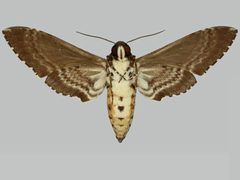
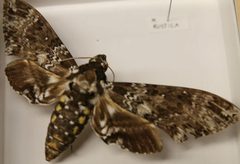
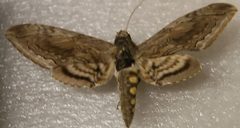
Manduca rustica, the rustic sphinx, is a large hawkmoth (Sphingidae) first described by Johan Christian Fabricius in 1775. The is notable for its broad geographic distribution across the Americas, ranging from the southern United States through Central and South America to Uruguay. It exhibits considerable ecological flexibility, inhabiting diverse environments from rainforests to deserts, and has been documented using plants from at least five plant . are and attracted to light sources.
Pronunciation
How to pronounce Manduca rustica: //ˈmæn.dʊ.kə ˈrʌs.tɪ.kə//
These audio files are automatically generated. While they are not always 100% accurate, they are a good starting point.
Identification
Manduca rustica can be distinguished from other North American Manduca by its more muted, less contrasting wing pattern compared to the boldly marked Manduca sexta (Carolina sphinx) and Manduca quinquemaculata (five-spotted hawkmoth). The species lacks the strong diagonal banding on the forewings seen in some . Accurate identification to species level typically requires examination of specimens or rearing larvae to maturity.
Images
Habitat
Occurs in varied including rainforests, deserts, urban areas, and disturbed environments. Demonstrates broad adaptability to both native vegetation and plantings.
Distribution
Southern United States (straying northward at times), southward through Mexico, Central America, and South America to Uruguay. Includes on Cuba, Jamaica, Galápagos Islands, and Lesser Antilles.
Diet
Larvae feed on foliage of various plants. Documented larval plants include Jasminum, Bignonia, Chilopsis, and Forestiera. Host records span multiple : Bignoniaceae, Oleaceae, Verbenaceae, Convolvulaceae, and Lamiaceae.
Host Associations
- Jasminum - larval in Oleaceae
- Bignonia - larval in Bignoniaceae
- Chilopsis - larval in Bignoniaceae
- Forestiera - larval in Oleaceae; documented in Lepidopterists' Society journal
Life Cycle
Complete with , larva, pupa, and stages. Larvae are large, horned caterpillars typical of the . Specific details of site and number of per year vary by region and are not well documented in available sources.
Behavior
are and strongly attracted to artificial light sources, including mercury-vapor and ultraviolet lights. Larvae consume substantial quantities of plant foliage.
Ecological Role
function as of night-blooming flowers. Larvae serve as herbivores that transfer plant to higher . The ' feeding habits and broad distribution suggest it plays a flexible role in diverse .
Human Relevance
Larvae may cause noticeable defoliation of ornamental plants including jasmine and other cultivated . are frequently encountered at light traps by entomologists and enthusiasts. The species is sometimes mistaken for related hawkmoths that are agricultural pests.
Similar Taxa
- Manduca sextaSimilar size and general appearance; distinguished by more contrasting wing pattern with bold dark markings and pale bands
- Manduca quinquemaculataOverlapping distribution and use; distinguished by five pairs of lateral abdominal spots in larvae and different wing pattern
Misconceptions
Larvae are sometimes perceived as pests due to conspicuous defoliation, but the is generally not a significant agricultural pest. The use leads to occasional presence on cultivated plants, but damage is typically localized and non-recurring.
More Details
Subspecies
Six recognized: M. r. rustica (Americas), M. r. cortesi (Mexico), M. r. cubana (Cuba, Jamaica), M. r. calapagensis (Galápagos Islands), M. r. harterti (Lesser Antilles, including Bonaire and St. Lucia)
Conservation status
is widespread and adaptable; no conservation concerns documented
Sources and further reading
- BugGuide
- Wikipedia
- GBIF taxonomy match
- iNaturalist taxon
- NCBI Taxonomy
- Catalogue of Life
- Bug Eric: Guest Post: "Friend or Foe?"
- Belostomatidae | Beetles In The Bush
- Rustic Sphinx Manduca rustica (Fabricius) (Insecta: Lepidoptera: Sphingidae)
- Forestiera (Oleaceae) is a Host Plant of Manduca rustica (Sphingidae)