
Amorpha juglandis
(Smith, 1797)
walnut sphinx
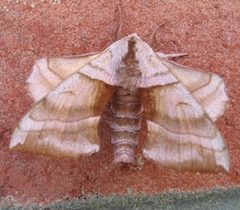
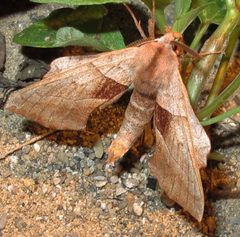
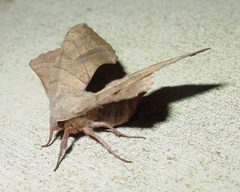
Amorpha juglandis, the walnut sphinx, is the sole in the Amorpha ( Sphingidae). The species is notable for its caterpillar's unique defensive : producing high-pitched whistles by expelling air through specialized abdominal . This acoustic defense has been experimentally shown to startle avian . are and active primarily during early night hours.
Pronunciation
How to pronounce Amorpha juglandis: //əˈmɔːrfə dʒuːˈɡlændɪs//
These audio files are automatically generated. While they are not always 100% accurate, they are a good starting point.
Identification
have a wingspan of 45–75 mm. The Amorpha is , containing only this . Caterpillars can be distinguished from similar sphingid larvae by their plant associations and, when disturbed, by their production of audible whistles through the eighth abdominal —a trait unique among caterpillars.
Images
Distribution
Native to North America, distributed from the Atlantic Ocean to the Rocky Mountains in Canada and the United States.
Host Associations
- Alnus - larval food plantalder
- Carya - larval food planthickory
- Corylus - larval food planthazelnut
- Fagus - larval food plantbeech
- Juglans - larval food plantwalnut
- Ostrya - larval food planthop-hornbeam
Behavior
are , with peak activity during early night hours. Caterpillars exhibit a distinctive defensive : when attacked by (particularly birds), they produce high-pitched whistle trains (44–2060 ms duration, 1–8 whistles) by forcing air through enlarged on the eighth abdominal segment. This whistling, accompanied by body contractions and thrashing, functions as an acoustic startle response that causes predators to hesitate, jump back, or dive away. The mechanism involves body segment contractions forcing air through specialized spiracles.
Similar Taxa
- Ceratomia catalpaeBoth are sphingid with similar ; distinguished by plant preferences and larval defensive (C. catalpae caterpillars do not produce whistles)