
Pachylioides resumens
Walker, 1856
Lesser Ficus Sphinx
Pachylioides resumens is a sphingid distributed across the Neotropics from Argentina north through Central America and the Caribbean, with occasional strays reaching the southern United States. The is commonly known as the Lesser Ficus Sphinx, reflecting its association with Ficus plants. It belongs to the tribe Dilophonotini within the Macroglossinae. The species was originally described by Francis Walker in 1856 under the basionym Pachylia resumens.
Pronunciation
How to pronounce Pachylioides resumens: //ˌpækɨliˈɔɪdiːz rɪˈsuːmənz//
These audio files are automatically generated. While they are not always 100% accurate, they are a good starting point.
Identification
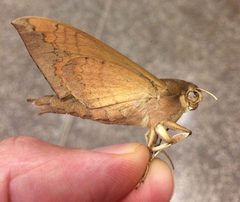
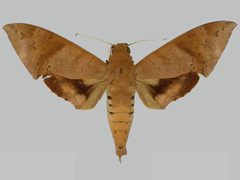
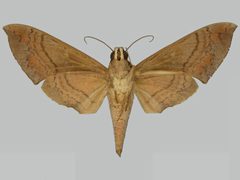
Distinguished from the similar Pachylia ficus (Greater Ficus Sphinx) by smaller overall size and more subdued wing patterning. Forewings are narrower with less prominent dark markings. Hindwings lack the strong contrasting bands seen in P. ficus. are relatively thicker compared to other Dilophonotini . Resting posture with wings held tent-like over the body, typical of the .
Images
Habitat
Tropical and subtropical lowland forests, secondary growth, and urban areas where Ficus are present. Occurs from sea level to moderate elevations. Strongly associated with riparian corridors and forest edges where plants grow.
Distribution
Native to South America (Argentina, Brazil, Bolivia, Paraguay, Uruguay), Central America (Panama, Rica, Nicaragua, Honduras, Guatemala, Mexico), and the Caribbean. Documented in 27 Brazilian states. Vagrant individuals recorded in southern Texas and southeastern Wyoming, USA.
Seasonality
fly year-round in tropical portions of the range. Peak activity during wet season in areas with pronounced dry seasons. Northern strays appear primarily during late summer and fall (August–October).
Diet
Larvae feed on Ficus (Moraceae), including Ficus citrifolia and related native figs. are nectar feeders, visiting flowers with long corollas.
Host Associations
- Ficus citrifolia - larval plant
- Ficus - larval plant-level association
Life Cycle
Complete with , larva, pupa, and stages. Larvae are hornworms with characteristic caudal horn. occurs in soil or leaf litter. Multiple per year in tropical range.
Behavior
Strong, fast fliers active during twilight and night. are attracted to artificial light sources. Larvae are solitary feeders on foliage.
Ecological Role
as . Larval herbivore on Ficus, contributing to nutrient cycling in forest . Serves as prey for birds, bats, and .
Human Relevance
Occasional minor pest in urban Ficus plantings. Attracted to porch lights, bringing it to human attention. Of interest to lepidopterists and enthusiasts.
Similar Taxa
- Pachylia ficusLarger size, more boldly patterned wings, and broader forewings; both share Ficus plants and overlapping range
- Pachylioides subhamataSimilar size and appearance but with more angular forewing apex and different geographic distribution
More Details
Taxonomic history
Originally described in Pachylia, later transferred to Pachylioides based on genitalic and wing venation differences. The genus Pachylioides currently contains three recognized .
Vagrancy pattern
Northward strays into the United States are associated with tropical weather systems and strong southerly winds, not established breeding .