
Syssphinx bisecta
Lintner, 1879
Bisected Honey Locust Moth
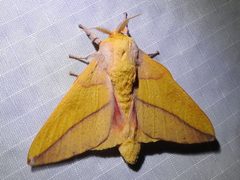
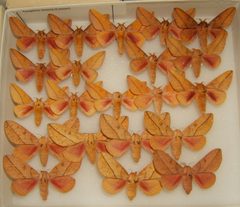
Syssphinx bisecta is a saturniid in the giant silk moth , closely related to Hubbard's Silkmoth (Syssphinx hubbardi). The occurs in North America with distribution records indicating presence across parts of the continent. As a member of the Syssphinx, it shares characteristics with other small to medium-sized silk moths that utilize leguminous plants.

Pronunciation
How to pronounce Syssphinx bisecta: /sɪsˈsɪŋks bɪˈsɛktə/
These audio files are automatically generated. While they are not always 100% accurate, they are a good starting point.
Identification
Separation from Syssphinx hubbardi and Syssphinx montana requires careful examination of specimens; larvae of S. bisecta and S. montana are nearly identical and cannot be reliably distinguished in the field or from photographs.
Images
Appearance
Medium-sized saturniid with wingspan smaller than more famous relatives like the Luna or Cecropia moths. Like , likely exhibits cryptic gray coloration with potentially bright hindwing coloration (pink in related ) exposed when startled. moths are and attracted to lights.
Habitat
Associated with supporting leguminous plants including mesquite-acacia scrub and oak-juniper woodlands in arid and semi-arid regions.
Distribution
North America; specific range details beyond continental presence not documented in available sources.
Similar Taxa
- Syssphinx hubbardiClosely related with similar size, coloration, and ; differ in specific markings but share gray forewings with bright pink hindwings
- Syssphinx montanaLarvae nearly identical to S. bisecta and cannot be separated in the field or from photos; require careful examination for identification
More Details
Taxonomic Note
The Syssphinx has been treated as Sphingicampa in some older literature; both names appear in historical references to this group.