
Phylloporia bistrigella
(Haworth, 1829)
Striped Bright
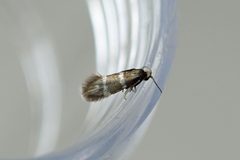
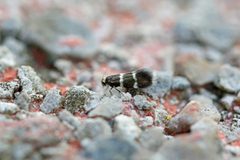
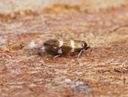
A small in the Incurvariidae with a wingspan of 7–9 mm. Recognizable by two whitish fasciae on the forewings. The larvae are leaf miners on birch .
Pronunciation
How to pronounce Phylloporia bistrigella: /fɪˌlɒˈpɔːriə ˌbaɪstrɪˈdʒɛlə/
These audio files are automatically generated. While they are not always 100% accurate, they are a good starting point.
Identification
Distinguished from other small Incurvariidae by the straight (not curved) whitish fascia at one-third combined with a second fascia beyond the middle. The second fascia may be interrupted, and a whitish discal spot may be present beyond it. The ochreous-fuscous coloration also aids identification.
Images
Appearance
Small with wingspan 7–9 mm. ochreous-fuscous. Forewings fuscous with a straight shining whitish fascia at one-third, and another sometimes interrupted fascia beyond the middle; sometimes with a whitish elongate discal spot beyond the second fascia. Hindwings grey.
Habitat
Associated with birch woodlands and areas where Betula occur.
Distribution
Western, northern and central Europe; north-eastern North America. Recorded from Belgium (Flemish and Walloon regions, Antwerpen province).
Diet
Larvae feed on Betula (birch).
Host Associations
- Betula - larval larvae mine leaves
Life Cycle
Larvae mine the leaves of their plant.
Behavior
presumably active during day; larvae create leaf mines on birch.
Ecological Role
on birch; contributes to nutrient cycling in birch-dominated .
Similar Taxa
- Other IncurvariidaeSimilar size and general appearance, but P. bistrigella distinguished by straight (not curved) first fascia and presence of second fascia
- Phylloporia species may share associations; specific wing pattern characters (straight fasciae, interrupted second fascia) separate bistrigella
More Details
Leaf mining behavior
Larvae create mines within birch leaves, a characteristic feeding strategy of the Incurvariidae
Taxonomic history
Originally described as Incurvaria bistrigella by Haworth in 1829, later transferred to Phylloporia