Stenodynerus lineatifrons
Bohart, 1948
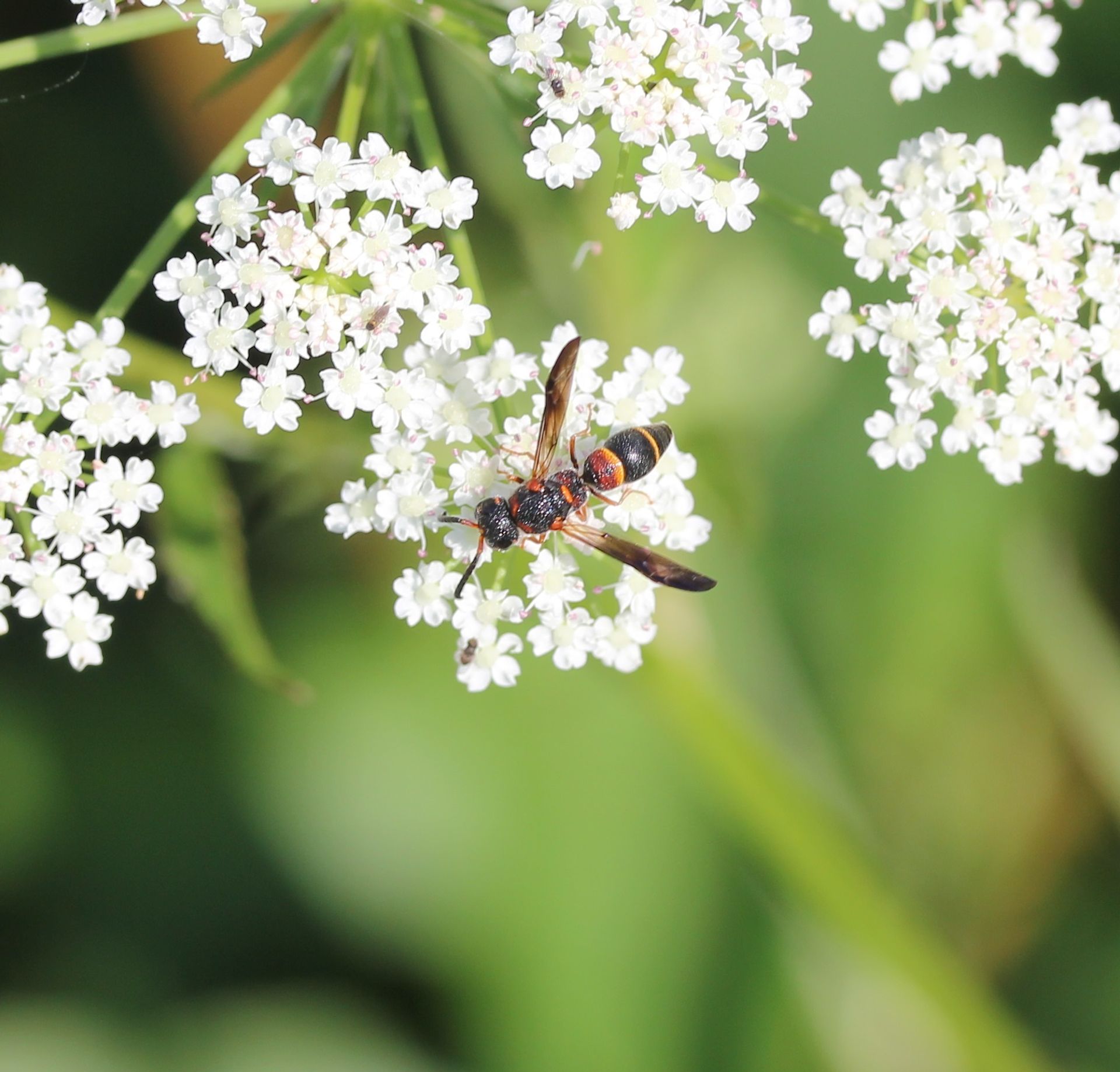
Stenodynerus lineatifrons is a of solitary mason wasp in the Eumeninae. It is a cavity-nesting that provisions its nests with paralyzed caterpillars for its larval offspring. The species was described by Bohart in 1948 and is currently considered a synonym of Rhynchalastor lineatifrons in some taxonomic databases, though it remains listed under Stenodynerus in others. Like other members of its , it is difficult to distinguish from the related genus Parancistrocerus based on images of live specimens.
Pronunciation
How to pronounce Stenodynerus lineatifrons: /ˌstɛnəˈdaɪnərəs ˌlɪniətɪˈfrɒnz/
These audio files are automatically generated. While they are not always 100% accurate, they are a good starting point.
Identification
Difficult to distinguish from Parancistrocerus based on images of live specimens; microscopic examination of actual specimens is usually required for definitive identification. Distinguished from Euodynerus by its smaller size and more patterning. The lined (front of ) indicated by the species name may aid in identification. Males can be recognized by the modified last antennal segment.
Images
Appearance
Small to medium-sized mason wasp with patterning. The name 'lineatifrons' refers to lined markings on the (front of the ). Males have the last antennal segment modified, appearing like a finger folded up against the adjacent segment. The body is more slender and smaller than some related mason wasps such as Euodynerus species.
Habitat
Associated with flowering vegetation in various ; has been observed at saltcedar (Tamarix) blossoms and Indian hawthorn (Rhaphiolepsis). As a cavity-nesting , it requires pre-existing tunnels such as borings in dead wood or hollow twigs for nesting.
Distribution
Recorded from Colorado and California in the western United States. The type locality and full range are not well documented in available sources.
Seasonality
Active during summer months; observed in June in Colorado and California.
Life Cycle
Cavity-nesting that uses pre-existing tunnels in dead wood or hollow twigs. The female provisions nest with paralyzed caterpillars as food for larval offspring. Development occurs within individual cells in the nest tunnel.
Behavior
Females hunt caterpillars, paralyze them, and transport them to nest . Males have been observed foraging on flowers for nectar. The is solitary, with no cooperative nesting .
Ecological Role
of caterpillars, helping to regulate herbivorous insect . As a , it visits flowers for nectar. Serves as potential for parasitic in Sapygidae.
Human Relevance
Generally beneficial as a agent of caterpillar pests. Occasionally nests in artificial blocks or bee condos provided for solitary bees and . Not known to be aggressive toward humans.
Similar Taxa
- Parancistrocerus spp.Extremely similar appearance; difficult or impossible to distinguish from Stenodynerus lineatifrons based on images of live specimens; microscopic examination usually required
- Euodynerus spp.Larger size and less patterning; Stenodynerus lineatifrons is smaller and more elaborately patterned
- Stenodynerus other speciesGeneric-level characters including overall body form; -level identification requires detailed examination
More Details
Taxonomic Status
The is listed as a synonym of Rhynchalastor lineatifrons in Catalogue of Life and GBIF, but remains under Stenodynerus in iNaturalist and other sources. The Rhynchalastor is sometimes treated as a subgenus of Stenodynerus.
Nesting Biology
Based on observations of related in the same , this species likely shares the general of cavity-nesting mason wasps, though specific details for S. lineatifrons have not been documented.