
Eumenes smithii
de Saussure, 1852
Smith's Potter Wasp
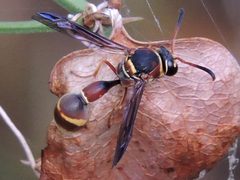
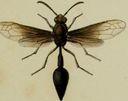
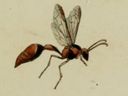
Eumenes smithii is a of potter wasp in the Vespidae, known for constructing distinctive mud nests resembling small urns or pots. The species was described by de Saussure in 1852 and is one of numerous Eumenes species distributed across North America. Like other potter wasps, females are solitary and provision their nests with paralyzed caterpillars as food for their larvae. The 'Smith's Potter Wasp' reflects both its nest-building and its specific epithet.
Pronunciation
How to pronounce Eumenes smithii: /juːˈmiːniːz ˈsmɪθ.aɪ.iː/
These audio files are automatically generated. While they are not always 100% accurate, they are a good starting point.
Identification
Identification to level within Eumenes requires examination of specific morphological characters including details of clypeal structure, genitalia, and precise color pattern elements. The Eumenes can be distinguished from other potter wasps by the combination of a long, slender petiole and the construction of free-standing mud pots rather than attached mud tubes or burrows. Eumenes smithii specifically may be separated from by subtle differences in clypeal shape and markings, though these require knowledge.
Images
Habitat
Found in a variety of open including grasslands, prairies, and woodland edges where suitable nesting substrates and prey are available. Nests are typically attached to vegetation or structures in sheltered locations.
Distribution
North America; specific range details for E. smithii are limited in available sources, but the Eumenes is broadly distributed across the continent.
Seasonality
are active during the warmer months. Nest construction and provisioning occur in summer. Depending on latitude and local conditions, some may produce multiple per year while others overwinter as within the sealed pots.
Diet
feed on nectar. Larvae are provisioned with paralyzed caterpillars (Lepidoptera larvae) captured by the female parent.
Life Cycle
Females construct individual mud pots, each containing a single . The pot is completed before hunting begins. The female captures and paralyzes several small caterpillars, stocking the pot with them. A single is laid inside, and the pot is sealed with a mud plug. The larva hatches and consumes the fresh, paralyzed prey (which does not decompose as dead prey would). After feeding, the larva pupates within the pot. The emerges by chewing a circular exit hole in the side of the pot. Some individuals may overwinter as , extending the across multiple years.
Behavior
Solitary nesting . Females work alone to construct nests, hunt prey, and provision . They are not aggressive and rarely sting unless handled. Males have been observed to defend nest sites in some Eumenes , but this behavior is not specifically documented for E. smithii. The nest architecture—free-standing mud pots with fluted necks—is among the most elaborate in the animal kingdom.
Ecological Role
of caterpillars, potentially providing of herbivorous Lepidoptera. The mud nests also provide incidental for various nest and commensals.
Human Relevance
Generally beneficial due to caterpillar . Nests are sometimes considered aesthetically interesting and have been compared to human-made pottery. Solitary nature means minimal stinging risk. Occasionally nests are found on human structures but cause no damage.
Similar Taxa
- Other Eumenes speciesShare the potter wasp nest architecture; require detailed morphological examination to distinguish
- Zethus speciesAlso construct mud nests but typically build different architectural forms
- Sceliphron caementarium (Black and Yellow Mud Dauber)Builds mud nests but constructs organ-pipe or clumped arrangements attached to substrates, not free-standing pots
More Details
Nesting Substrate
Nests are constructed from mud or clay gathered by the female. The quality and appearance of nests varies with soil type; nests built in sandy or dusty soils may appear rougher than those built in finer clay.
Historical Note
The specific epithet 'smithii' honors an individual named Smith, though the exact identity is not specified in the original description.