
Euura robusta
Euura robusta is a of in the Tenthredinidae, Nematinae. Sawflies in this are typically associated with willow (Salix) species, on which larvae feed and induce gall formation. The genus Euura contains numerous species that are morphologically similar and often require examination for accurate identification. As with other Nematinae, this species lacks the narrow waist characteristic of and bees, instead showing a broad connection between and .
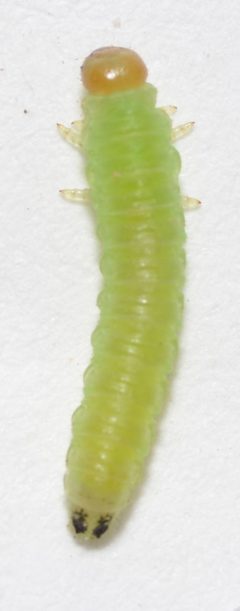
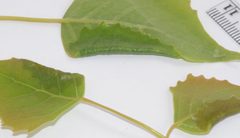
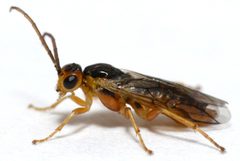
Pronunciation
How to pronounce Euura robusta: //ˈjuː.ʊə rəʊˈbʌs.tə//
These audio files are automatically generated. While they are not always 100% accurate, they are a good starting point.
Identification
Identification to level in Euura requires examination of minute morphological characters, including details of , saw (ovipositor in females), and genitalia. may be confused with other Nematinae , particularly other Euura species. Larval identification depends on plant association and gall . Separation from related such as Pontania and Nematus relies on subtle differences in wing venation, antennae segmentation, and body proportions.
Images
Habitat
Associated with willow-dominated , including riparian zones, wetlands, and areas with Salix . Specific microhabitat preferences for this species are not documented.
Distribution
Distribution data is sparse; the has been recorded from limited observations. The Euura is widespread in the Holarctic region.
Seasonality
activity period is not well documented for this . Nematinae typically have adult in spring and early summer, coinciding with willow leaf development.
Host Associations
- Salix - larval food plant and gall inducerLarvae feed on willow tissues and induce gall formation; specific Salix used by E. robusta are not documented
Life Cycle
As with other Nematinae, development likely includes , larval, pupal, and stages. Larvae are endophagous, feeding within plant tissue and inducing characteristic galls on willow. probably occurs in soil or within the gall. Detailed information for this specific is not available.
Behavior
Females use their saw-like ovipositor to insert into willow tissue, initiating gall formation. Larvae feed gregariously within galls in some related , but specific for E. robusta is undocumented.
Ecological Role
As a gall-inducer, contributes to plant-insect interactions and provides microhabitats for other organisms. Part of the complex of herbivores associated with willow .
Human Relevance
No documented economic or medical significance. May be of interest to studying gall-forming insects and willow-associated biodiversity.
Similar Taxa
- Euura mucronataSimilar size and association; requires examination of morphological details for separation
- Pontania speciesAlso gall-inducing on willow; distinguished by subtle differences in wing venation and body proportions
- Nematus speciesRelated Nematinae with similar ; differ in details of and saw structure
More Details
Taxonomic note
Euura is a large with complex ; many were formerly placed in Pontania or other genera. The group is under active revision, and species boundaries remain challenging to define.