
Nematus
Panzer, 1801
Willow Sawflies
Species Guides
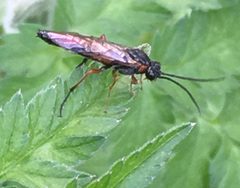
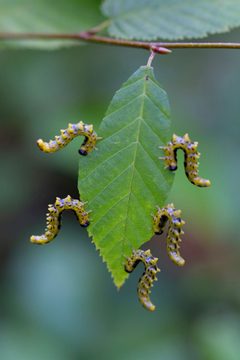
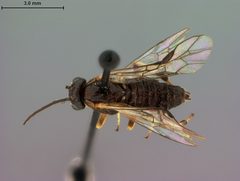
8Nematus is a of (Hymenoptera: Tenthredinidae) commonly known as willow sawflies. within this genus are phytophagous, with larvae feeding on leaves of various plants including willows, poplars, birches, and rhododendrons. Several species are recognized as significant economic pests of fruit bushes, trees, and ornamental plants. The genus has a wide geographic distribution spanning Europe, Asia, and North America.
Pronunciation
How to pronounce Nematus: /nɛˈmeɪtəs/
These audio files are automatically generated. While they are not always 100% accurate, they are a good starting point.
Images
Habitat
Associated with plants including willows (Salix spp.), poplars (Populus spp.), birches (Betula spp.), and rhododendrons (Rhododendron spp.). Some pupate in soil at depths of 10–15 cm.
Distribution
Recorded from Denmark, Norway, Sweden, Latvia, Turkey (North and East Anatolia regions), and China (Liaoning, Inner Mongolia, Beijing, Xizang/Tibet). Also present in North America including the USA and Vermont.
Diet
Larvae are folivorous, feeding on leaves of plants. Documented hosts include Salix alba, Salix matsudana, Populus × beijingensis, Betula pendula, and Rhododendron spp.
Host Associations
- Salix alba - larval food plant
- Salix matsudana - larval food plant
- Populus × beijingensis - larval food plant
- Betula pendula - larval food plant
- Rhododendron albrechtii - larval food plant
Life Cycle
Some are (one per year). includes , larval, pupal, and stages. occurs in soil. Adults of some species are active on sunny days and exhibit peak periods.
Behavior
exhibit electroantennogram and behavioral responses to plant volatiles. Unmated adults show attraction to specific aldehydes including (E)-2-hexenal and benzaldehyde at 100 µg/µL. Sex-specific differences exist in repellent responses to certain volatile compounds.
Ecological Role
Some function as significant economic pests causing damage to ornamental and forest trees. Characterized by rapid and high in conditions.
Human Relevance
Several are serious pests of fruit bushes, trees, and ornamental plants. Nematus lipovskyi (azalea sawfly) is an non-native species in Europe, first recorded in the Czech Republic in 2010 and subsequently in Latvia.
Sources and further reading
- BugGuide
- GBIF taxonomy match
- iNaturalist taxon
- NCBI Taxonomy
- Catalogue of Life
- Huş Ağacında Zarar Yapan Nematus (=Croesus) septentrionalis (L., 1758) (Hymenoptera: Tenthredinidae)’in Biyolojisi Biology of the Nematus (=Croesus) septentrionalis (L., 1758) (Hymenoptera: Tenthredinidae) Making Damage to Betula pendula RothTree
- FIRST RECORDS OF AZALEA SAWFLY NEMATUS LIPOVSKY SMITH, 1974 (HYMENOPTERA: TENTHREDINIDAE) IN LATVIA
- Electroantennogram and olfactory behavioral responses of adult Nematus hequensis Xiao to volatiles from Salix alba leaves
- Oviposition Preference and Larval Performance of Nematus oligospilus (Hymenoptera: Tenthredinidae) in Relation to Host Plant Vigor