
Fenusa pumila
Leach, 1817
birch leafminer, Birch Leafminer Sawfly
Fenusa pumila is a in the Tenthredinidae, commonly known as the birch leafminer. Native to Europe, it has been introduced to North America where it has become established. The species is a leaf-mining herbivore on birch trees, with larvae feeding internally within leaf tissue. In North America, may complete two to four annually, with triggered by accumulated growing .
Pronunciation
How to pronounce Fenusa pumila: //fɛˈnuː.sə ˈpuː.mɪ.lə//
These audio files are automatically generated. While they are not always 100% accurate, they are a good starting point.
Identification
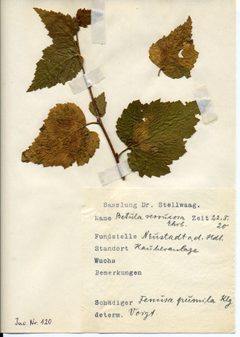
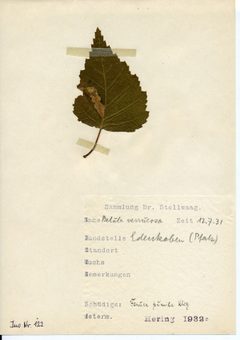
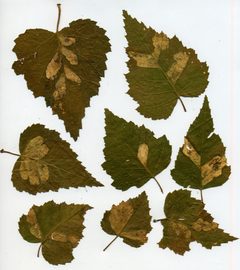
Larvae create distinctive serpentine or blotch mines within birch leaves, visible as pale, discolored trails or patches on the leaf surface. are small that require identification; they lack the narrow waist characteristic of many and have two pairs of membranous wings. Mines can be distinguished from those of other birch-feeding insects by their pattern and the presence of (larval excrement) arranged in discrete lines or scattered within the mine.
Images
Habitat
Associated with stands of birch trees (Betula spp.), particularly in temperate deciduous and mixed forests. Occurs in both natural woodland settings and urban or suburban plantings where birch is cultivated.
Distribution
Native to Europe, with confirmed presence in Belgium. Introduced and established in North America.
Seasonality
In North America, emerge after approximately 65 growing ; multiple (two to four) may occur per year depending on local climate conditions.
Diet
Larvae feed exclusively on birch leaves (Betula spp.), mining internally within the leaf mesophyll. do not feed; their mouthparts are reduced or non-functional.
Host Associations
- Betula - obligate larval larvae mine leaves of birch
Life Cycle
Holometabolous with complete . are laid in birch leaf tissue. Larvae develop through several instars while mining within leaves, then exit to pupate in soil. Multiple per year reported in North America.
Behavior
Larval leaf-mining creates visible damage patterns on birch foliage. are short-lived and primarily focused on .
Ecological Role
As a herbivore, contributes to natural pruning of birch foliage. In North America, where introduced, may reach densities and cause significant aesthetic and physiological damage to ornamental and native birch trees.
Human Relevance
Considered a pest of ornamental birch trees in North America, where heavy can cause premature leaf drop, branch dieback, and reduced tree vigor. Subject to management efforts including biological and chemical control.
Similar Taxa
- Profenusa thomsonialso a birch leafminer ; distinguished by mine shape and pattern, though examination may be required
- Heterarthrus nemoratusanother European birch leafminer introduced to North America; larval mines and differ in subtle characters