
Eutomostethus luteiventris
(Klug, 1816)
Yellow-bellied Rush-cutter
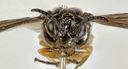
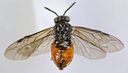
A small measuring 5–7 mm, characterized by a black and contrasting with an orange-yellow marked with black patterns. The is notable for its parthenogenetic in Britain and Ireland, where only females have been recorded. It completes a single per year in the UK, with activity restricted to spring. The has been sequenced as part of the Darwin Tree of Life project, revealing a haploid assembly of 272.06 Mb.
Pronunciation
How to pronounce Eutomostethus luteiventris: /juːtəmoʊˈstiːθəs ˌluːteɪˈvɛntrɪs/
These audio files are automatically generated. While they are not always 100% accurate, they are a good starting point.
Identification
Distinguished from similar by the combination of black and with orange-yellow bearing black markings. The small size (5–7 mm) and association with rushes (Juncus) in damp provide additional diagnostic context. In Britain and Ireland, the absence of males may aid identification, though this trait is not externally visible.
Images
Habitat
Damp places, typically associated with stands of rushes (Juncus spp.).
Distribution
Common throughout Britain and most of Europe; introduced in North America. Recorded in Belgium (Flemish and Walloon regions), Canada (Alberta), and the UK (specimen from Thompson Common, Norfolk).
Seasonality
Single per year in the UK. occur from late April to June.
Diet
Larvae feed on rushes (Juncus spp.). Early instars feed inside foliage; final instar feeds externally.
Host Associations
- Juncus spp. - larval plantLarvae feed inside foliage initially, then externally in final instar
Life Cycle
Single per year in the UK. Larval development occurs within and on rushes (Juncus spp.).
Behavior
Final instar larvae switch from internal feeding within rush foliage to external feeding.
Human Relevance
sequenced as part of the Darwin Tree of Life project (haploid assembly 272.06 Mb in 6 chromosomal pseudomolecules; mitochondrial genome 30.01 kb). No significant economic or medical importance documented.
Similar Taxa
- Other Eutomostethus speciesSimilar size and general ; distinguished by specific color pattern of black with orange-yellow marked and association with Juncus
- Other Blennocampinae sawfliesShare and characteristics; separated by plant specificity and abdominal coloration pattern
More Details
Reproduction
Parthenogenetic in Britain and Ireland; only females recorded in this region. Mechanism of in other parts of range not confirmed from available sources.
Genomic Resources
Reference available: Wellcome Open Research 2025, PMC12759282. Haploid assembly 272.06 Mb in 6 chromosomal pseudomolecules; mitochondrial genome 30.01 kb.