
Macremphytus
MacGillivray, 1908
Dogwood Sawflies
Species Guides
4Macremphytus is a of common sawflies in the Tenthredinidae, comprising at least four described . The best-known member is Macremphytus tarsatus, commonly called the dogwood , which is a significant defoliator of dogwood trees in North America. Sawflies in this genus are herbivorous, with larvae feeding on leaves of woody plants. The genus exhibits distinctive larval traits including waxy secretions and in wood.
Pronunciation
How to pronounce Macremphytus: /maˈkrɛm.fɪ.təs/
These audio files are automatically generated. While they are not always 100% accurate, they are a good starting point.
Identification
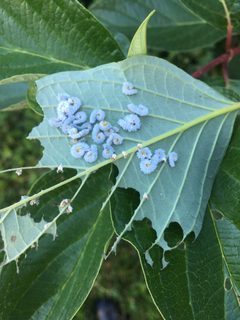
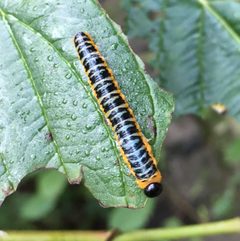
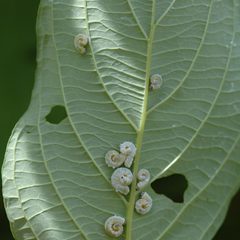
Larvae distinguished from caterpillars (Lepidoptera) by possessing six or more pairs of fleshy on abdominal segments versus five or fewer in caterpillars. Early instars covered in white waxy filaments; mature larvae of M. tarsatus display yellow, white, and black coloration. are small, -like insects.
Images
Habitat
Associated with deciduous woodlands and ornamental landscapes containing plants, particularly dogwoods (Cornus spp.) and trees in the walnut (Juglandaceae).
Distribution
North America; records include Vermont and broader United States.
Seasonality
emerge and fly from May through July. Larvae develop through summer, with mature larvae seeking sites in wood during autumn.
Diet
Larvae feed on leaves of plants including grey dogwood (Cornus racemosa), silky dogwood (Cornus amomum), flowering dogwood (Cornus florida), black walnut (Juglans nigra), butternut (Juglans cinerea), and hickories (Carya spp.).
Host Associations
- Cornus racemosa - grey dogwood, favored
- Cornus amomum - silky dogwood
- Cornus florida - flowering dogwood
- Juglans nigra - black walnut
- Juglans cinerea - butternut
- Carya spp. - hickories
Life Cycle
Winter spent as larva in chamber constructed in rotting wood or structural wood including siding and decks. In spring, larvae pupate. emerge May-July, mate, and females deposit in clutches of 100 or more on undersurfaces of leaves. Eggs hatch and larvae develop through multiple instars over summer. Mature larvae abandon plants in autumn to construct galleries in wood.
Behavior
Larvae initially feed gregariously, skeletonizing leaves; later instars may consume entire leaves except midveins. Early instars curl beneath leaves when disturbed. Mature larvae bore into wood to create chambers, producing sawdust-like .
Ecological Role
Herbivore and defoliator of native and ornamental trees. Larvae serve as food source for and ; waxy secretions may provide defense against and .
Human Relevance
M. tarsatus recognized as occasional pest of ornamental dogwoods and landscape plantings. Larval boring into structural wood, including decks and siding, can cause minor cosmetic damage.
Similar Taxa
- Eriocampa juglandisButternut woollyworm, another with white waxy larval secretions; distinguished by preference (walnut ) and pupal in soil rather than larval overwintering in wood
- Atomacera deceptaMallow sawfly, similar larval and waxy secretions; distinguished by plants (mallows/Hibiscus) and different timing
Sources and further reading
- BugGuide
- Wikipedia
- GBIF taxonomy match
- iNaturalist taxon
- NCBI Taxonomy
- From the Bug of the Week Mailbag: Who’s been munching on my deck? Dogwood sawfly, Macremphytus tarsatus — Bug of the Week
- What lies beneath the wax? A duo of leaf-eating sawflies: Dogwood sawfly, Macremphytus tarsatus, and Butternut woollyworm, Eriocampa juglandis — Bug of the Week
- Archive — Bug of the Week