
Atomacera decepta
Rohwer, 1911
Hibiscus Sawfly, Mallow Sawfly
The hibiscus sawfly (Atomacera decepta) is a herbivorous in the Argidae that feeds primarily on members of the mallow family (Malvaceae). Despite its caterpillar-like larvae, it belongs to the Hymenoptera (bees, , and ants) rather than Lepidoptera. The is known for causing significant defoliation damage to ornamental hibiscus, hollyhocks, and marsh-mallow, though it has not developed a strong preference for economically important crops like cotton or okra.
Pronunciation
How to pronounce Atomacera decepta: /ˌætəˈmæsɛrə dɪˈsɛptə/
These audio files are automatically generated. While they are not always 100% accurate, they are a good starting point.
Identification
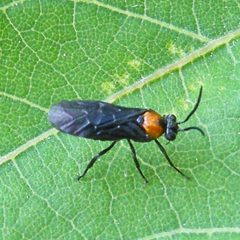
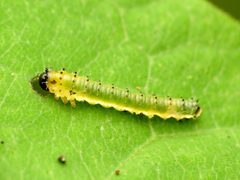
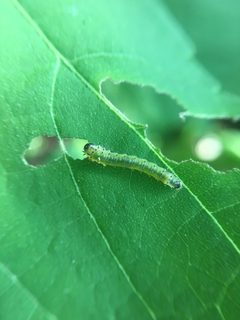
Distinguished from true caterpillars (Lepidoptera) by its membership in Hymenoptera; larvae have more pairs of than lepidopteran caterpillars. Damage include shot holes in early stages progressing to shredded, skeletonized leaves with only remaining. are recognized by the combination of dark wings and bright orange in females.
Images
Habitat
Gardens, raingardens, swales, drainage channels, and natural areas where plants in the mallow (Malvaceae) occur. Associated with both cultivated ornamental plantings and wild stands of marsh-mallow.
Distribution
Found in eastern North America. Multiple occur annually, with up to six generations reported in southern states and fewer in Maryland and more northern regions.
Seasonality
Active during warm months; with summer temperatures, a may complete in approximately one month. emerge from pupae to resume feeding and through the growing season.
Diet
herbivore feeding on members of the mallow (Malvaceae). Primary include hollyhocks (Alcea rosea), ornamental rose mallow and hibiscus (Hibiscus spp.), and common marsh-mallow (Althaea officinalis). Several hibiscus varieties show resistance, including Hibiscus acetosella, H. aculeatus, and H. grandiflora.
Host Associations
- Hollyhock - primary Alcea rosea
- Rose mallow - primary Hibiscus spp.
- Marsh-mallow - primary Althaea officinalis
- Cotton - non-Gossypium spp.; not a significant pest
- Okra - non-Abelmoschus esculentus; not a significant pest
- Rose of Sharon - minor Hibiscus syriacus; limited damage reported
Life Cycle
Females use their saw-like ovipositor to carve small slits in leaf surfaces, depositing one per slit. Larvae hatch and pass through six instars, feeding on leaf tissue. As larvae grow, damage progresses from tiny shot holes to extensive defoliation. Mature larvae move to the base of the plant to pupate on lower stems and in soil. emerge from pupae, mate, and females seek new plants to continue the cycle. Multiple occur annually, with generation time shortening to approximately one month under warm summer conditions.
Behavior
Larvae feed externally on leaves, beginning with small holes and progressively consuming larger areas of leaf tissue. are active fliers that locate plants visually or chemically. No complex social ; individuals operate independently.
Ecological Role
Herbivore that converts plant into animal tissue, serving as potential prey for predatory . Contributes to nutrient cycling when larvae are discarded into compost. Not a significant despite visiting flowers.
Human Relevance
Minor agricultural and horticultural pest of ornamental mallows. Damage is primarily aesthetic, reducing the visual appeal of hibiscus and hollyhock plantings. Manual removal of larvae is an effective control strategy. Chemical are available but their use is complicated by high visitation rates of and beneficial insects to hibiscus flowers. Some hibiscus varieties exist.
Similar Taxa
- True caterpillars (Lepidoptera larvae)Similar caterpillar-like appearance but distinguished by greater number of and different capsule structure; larvae have 6-8 pairs of prolegs without (hooked spines) present in Lepidoptera
- Other Argidae sawfliesRelated in the same feed on different plants; identification requires host association and