
Atomacera
Say, 1836
mallow sawfly, hibiscus sawfly
Species Guides
2- Atomacera debilis(trefoil sawfly)
- Atomacera decepta(Hibiscus Sawfly)
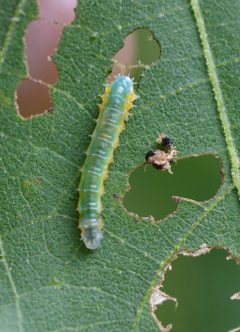
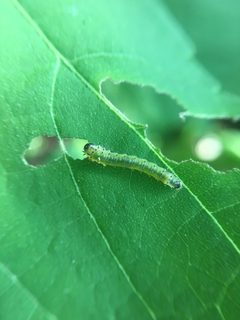
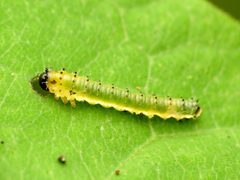
Atomacera is a of in the Argidae, commonly known as mallow sawflies or hibiscus sawflies. These insects are herbivorous members of the Hymenoptera, representing a primitive branch of the order that lacks the constricted waist typical of , bees, and ants. The genus contains that feed on plants in the mallow family (Malvaceae), including ornamental hibiscus, hollyhocks, and marsh-mallow. Despite their caterpillar-like appearance, sawfly larvae are distinct from Lepidoptera larvae in having more pairs of .
Pronunciation
How to pronounce Atomacera: /ˌætoʊməˈsɪərə/
These audio files are automatically generated. While they are not always 100% accurate, they are a good starting point.
Identification
Distinguished from true caterpillars (Lepidoptera) by having more than five pairs of . Separated from other by association with Malvaceae and specific larval including stout spines. differ from and bees by the absence of a narrow petiole (wasp waist).
Images
Habitat
Gardens, raingardens, swales, drainage channels, and natural areas where plants in the mallow (Malvaceae) occur. Associated with both cultivated ornamental plantings and wild of marsh-mallow.
Distribution
North America; occur in the eastern United States including Maryland, with multiple per year in southern states and fewer in northern regions.
Seasonality
Active during growing season when plants are available; in Maryland, activity begins in spring and continues through summer with multiple possible. In southern states, up to six generations per year may occur.
Diet
Herbivorous; larvae feed on leaves of plants in the mallow (Malvaceae), including hibiscus (Hibiscus spp.), hollyhock (Alcea rosea), rose mallow, and marsh-mallow (Althaea officinalis). Not known to feed on cotton, okra, or rose of Sharon.
Host Associations
- Hibiscus - primary Ornamental including H. acetosella, H. aculeatus, and H. grandiflora (the latter noted as )
- Alcea - primary Hollyhock
- Althaea - primary Marsh-mallow
Life Cycle
Females use saw-like ovipositor to carve slits in leaf surface and deposit . Larvae pass through six instars, feeding on leaf tissue and creating shot holes initially, then shredding leaves and leaving only . Mature larvae move to base of plant or soil to pupate. emerge to mate and oviposit. time approximately one month under warm conditions.
Behavior
Larvae feed gregariously or solitarily on leaf surfaces, consuming tissue from leaf edges or creating holes. Feeding damage progresses from small shot holes to complete skeletonization of leaves. occurs in soil or at plant base.
Ecological Role
Herbivore and occasional pest of ornamental plants. Larvae serve as prey for predatory in compost and soil . visit flowers but are not significant .
Human Relevance
Minor pest of ornamental hibiscus, hollyhocks, and related garden plants. Damage is primarily aesthetic, reducing plant vigor through defoliation. Managed through hand-picking larvae, selecting hibiscus varieties, or targeted insecticidal applications (though latter is discouraged due to visitation to hibiscus flowers).
Similar Taxa
- Lepidoptera larvae (caterpillars)Similar larval appearance but distinguished by number ( have 6-8 pairs, caterpillars have ≤5 pairs) and presence of on prolegs in caterpillars only
- Other Argidae generaRelated distinguished by plant associations and specific morphological features of and larvae
Misconceptions
Often mistaken for caterpillars (Lepidoptera larvae) due to similar appearance and feeding damage. The '' refers to the saw-like ovipositor, not to any association with true flies (Diptera).
More Details
Taxonomic placement
Atomacera belongs to the suborder , the ' and horntails,' which represents the most basal lineage of Hymenoptera. Unlike the more derived (, bees, ants), symphytans lack a constricted waist between and .
Pest management notes
hibiscus varieties include Hibiscus acetosella, H. aculeatus, and H. grandiflora. Weekly inspection and manual removal of larvae is recommended as a low-impact management strategy.